Hernia surgery in Bathinda is assessed by Dr Raman Garg at Bombay Gastro & Cancer Institute, Power House Road. The clinic reports 1,000+ laparoscopic hernia repairs. Whether open or laparoscopic repair is suitable depends on the hernia, symptoms, health and examination. Ask about alternatives, material risks, recovery guidance and a current written cost estimate before deciding.
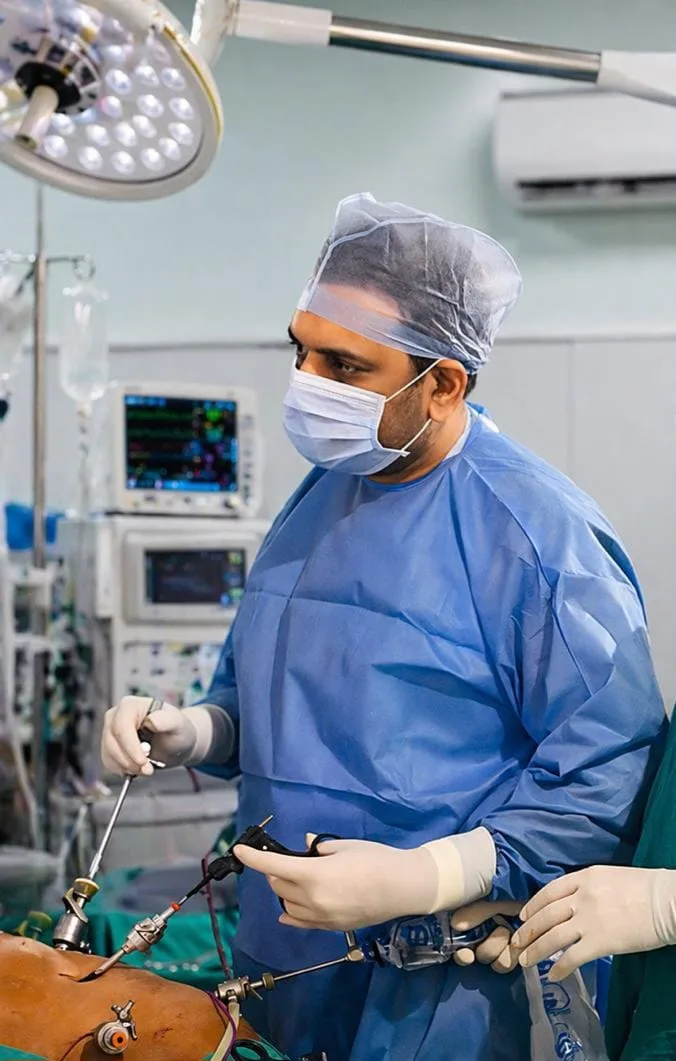
Do You Have a Hernia? Common Signs
A hernia can appear as a bulge in the groin, near the navel or at an old surgical incision. It may become more noticeable with coughing, lifting or standing and change when you lie down. A dragging sensation, discomfort during activity or a lump that returns deserves clinical assessment. Examination helps distinguish a hernia from other causes of a lump or pain.
- A soft bulge in the groin, around the navel or over a previous operation scar
- A lump that changes with coughing, lifting, standing or lying down
- Heaviness or discomfort during walking, exercise or physical work
- A new painful, firm or non-reducible bulge that needs urgent assessment
Medicines or a support garment may ease symptoms for some people but do not repair the defect. Ask whether observation or repair is reasonable for your diagnosis. Read the hernia symptoms guide in Hindi for general information.
How Hernia Symptoms Can Differ
People searching “hernia symptoms,” “groin lump when coughing” or “hernia pain while lifting” may be describing different conditions. A bulge can be in the groin, around the navel or at an old incision; some internal hernias do not create an obvious lump. A bulge that changes with coughing, standing or lying down may be relevant, but it is not enough to diagnose a hernia. Note where it is, when it appears, whether it is changing and whether you have pain, nausea or bowel symptoms. An examination helps determine whether further tests or a specialist review are appropriate.
A small or painless bulge still deserves an assessment if it is new or changing. Do not assume that every lump is a hernia or that a painful lump can safely be managed at home. Sudden severe pain, a firm tender bulge, skin colour change, vomiting or inability to pass stool or gas needs urgent medical attention. For general information on symptoms and types, read the NHS hernia guide.
Types of Hernia Assessed in Bathinda
Inguinal Hernia (Groin Hernia)
A bulge in the groin can have several causes. Examination helps confirm whether it is an inguinal hernia and whether observation or repair should be discussed.
Umbilical Hernia (Navel Hernia)
A bulge near the navel may need assessment. Repair options depend on the defect, symptoms and individual health.
Incisional Hernia: Assessment and Care
A bulge at a previous surgical incision may need detailed assessment. Prior operation notes, the defect and overall health help guide planning.
Femoral Hernia: Assessment and Care
A bulge below the groin crease should be assessed by a clinician. Urgency and treatment depend on examination and symptoms; sudden severe pain needs urgent care.
Hiatal Hernia: Symptoms and Care
Part of the stomach moves through the diaphragm opening. Some cases are managed without surgery; an operation is considered after assessment of symptoms, anatomy and response to other treatment.
Bilateral Hernia: Assessment and Options
Both groins may be involved. The surgeon reviews each side and explains whether one or both need treatment and which approach is reasonable.
Recurrent Hernia: Assessment and Care
A bulge after an earlier repair needs review of the prior operation, symptoms and available records before another plan is considered.
Epigastric & Spigelian Hernia
These hernias can occur above the navel or along the abdominal wall. The need for repair and any use of mesh are decided individually.
Read the procedure guides for inguinal hernia repair, umbilical hernia surgery and incisional hernia repair in Bathinda.
Hernia Treatment Options: Laparoscopic, Open or Watchful Waiting
Observation, open repair and laparoscopic repair may be discussed depending on symptoms, hernia type, examination, prior operations and general health. Ask why an option is recommended, what alternatives are reasonable and what risks matter in your case. A minimally invasive approach is not automatically suitable for every person.
The comparison below is a discussion guide, not a promise about incision size, pain, admission or recovery. The treating surgeon can explain whether an approach such as TEP or TAPP is relevant, whether one or both sides need treatment and whether a previous repair changes planning. Confirm current insurance and pre-authorisation details with the clinic and your insurer.
What Can Affect the Timing of Hernia Treatment?
There is no single timetable that applies to every hernia. The clinician considers the type and location, symptoms, examination findings, whether the bulge changes, prior repairs and the person’s overall health. Work demands, other medical conditions and the patient’s preferences may also affect how a planned repair is discussed. A new or changing bulge should be assessed rather than managed from an online checklist.
Ask the surgeon to explain whether it is reasonable to monitor the hernia, what change should prompt an earlier review and what symptoms need emergency attention. If you are preparing for a planned operation, ask about medicines, fasting or other preparation only after the treating team provides instructions. Do not stop regular medicines or use a support belt as a substitute for clinical advice. For a current estimate, request an itemised written quote after your case has been assessed; online figures cannot account for the details of an individual admission.
Safe Daily Habits While You Arrange an Assessment
There is no food, exercise or home remedy that repairs a hernia. Until you have been assessed, notice which movements or tasks increase discomfort and ask the clinic what activity is appropriate for your case. Avoid forcing through sharp or worsening pain, but do not impose long-term restrictions without advice. If constipation or straining is a concern, ask a clinician whether changes to fluids, fibre, activity or medicines are suitable for you; these measures do not treat the hernia itself.
A support garment may be discussed for selected people, but it does not close the defect and should not delay assessment. Do not try to force a painful, firm or discoloured bulge back into place. Keep a note of symptom changes and bring previous surgery records if available. If urgent warning signs develop, use emergency care rather than waiting for the scheduled consultation.
Why Laparoscopic Hernia Surgery? Compare the Options
Hernia Surgery Cost in Bathinda
Ask for a current written estimate after clinical assessment. Review included and excluded services, materials and insurance terms. Read hernia surgery cost in Bathinda or call +91 82641-60001 to arrange an assessment.
Hiatus Hernia Surgery in Bathinda
A hiatus (hiatal) hernia is different from a groin, navel or incision-site hernia: part of the stomach moves through an opening in the diaphragm. Finding one on a scan does not automatically mean an operation is needed. A clinician considers the patient's symptoms, examination and test results, and whether appropriate non-surgical treatment has helped. In selected cases, surgery to repair the hiatus and reduce reflux may be discussed. The expected benefits, alternatives, recovery and risks should be reviewed for each patient. For reflux assessment, read about hiatus hernia and acid reflux surgery; for minimally invasive surgery information, see laparoscopic surgery in Bathinda.
What Happens at a Hernia Surgeon Consultation in Bathinda?
The clinician asks where the bulge is, when it appears and whether it changes with activity. Mention previous abdominal operations, hernia repairs, mesh implants, medicines and important health conditions. Examination may guide the next step; imaging can be discussed if diagnosis or anatomy is unclear. Bring reports if available, but do not delay urgent care to collect them.
If repair is discussed, ask about the diagnosis, recommended approach, alternatives, individual risks, mesh rationale, recovery and follow-up. Confirm the next step and request a current itemised estimate after assessment. Before travelling, confirm the clinic's appointment availability, address and hours.
Questions to Ask Before a Planned Hernia Repair
A planned consultation is an opportunity to understand the diagnosis and make an informed decision. Consider taking these questions with you; not every question will apply to every type of hernia:
- What type of hernia do I have, and how was it confirmed?
- Is observation reasonable, or do my symptoms and findings support discussing repair now?
- Why are you recommending open or laparoscopic repair for my situation?
- Would mesh be used? If so, what benefit, alternatives and risks should I understand?
- What are the important risks in my case, and what could change the planned approach?
- What preparation, medicines and follow-up will I need?
- Which restrictions should I follow for work, lifting, exercise and driving?
- What does the written estimate include, and what may be billed separately?
Ask the treating surgeon to explain any unfamiliar term and how the answer relates to your health, previous operations and daily activities. A second opinion can be reasonable for a non-urgent decision. If symptoms suddenly become severe, the bulge turns hard or discoloured, or vomiting starts, do not wait for a routine appointment—seek urgent medical care.
Hernia Symptoms and Emergency Signs
⚠ Go to Emergency Immediately if you notice:
- Hernia becomes hard, cannot be pushed back in (irreducible/incarcerated hernia)
- Overlying skin turns red, purple, or dark — Strangulated hernia: life-threatening emergency
- Sudden severe pain at the hernia site
- Nausea, vomiting, inability to pass stools or gas
- Fever with hernia pain
For severe or rapidly worsening symptoms, seek emergency care at the nearest appropriate facility.
For patient feedback, see the patient reviews page. Reviews should be shown only when they come from a verifiable source and are used with appropriate permission.
Recovery After Hernia Surgery: What to Expect
Recovery depends on the type of repair, the patient's health, the findings during treatment and any complications. The treating team should give patient-specific guidance about walking, wound care, medicines, lifting, driving, work and follow-up. Do not use a fixed online timeline as a substitute for your discharge instructions.
Contact the treating team if you have a new concern or symptoms worsen. Sudden severe pain, persistent vomiting, fever, a painful firm bulge or a bulge that cannot be reduced needs urgent medical assessment. For immediate or severe symptoms, use local emergency services or go to the nearest emergency department.
Hernia Anatomy and Why the Type Matters
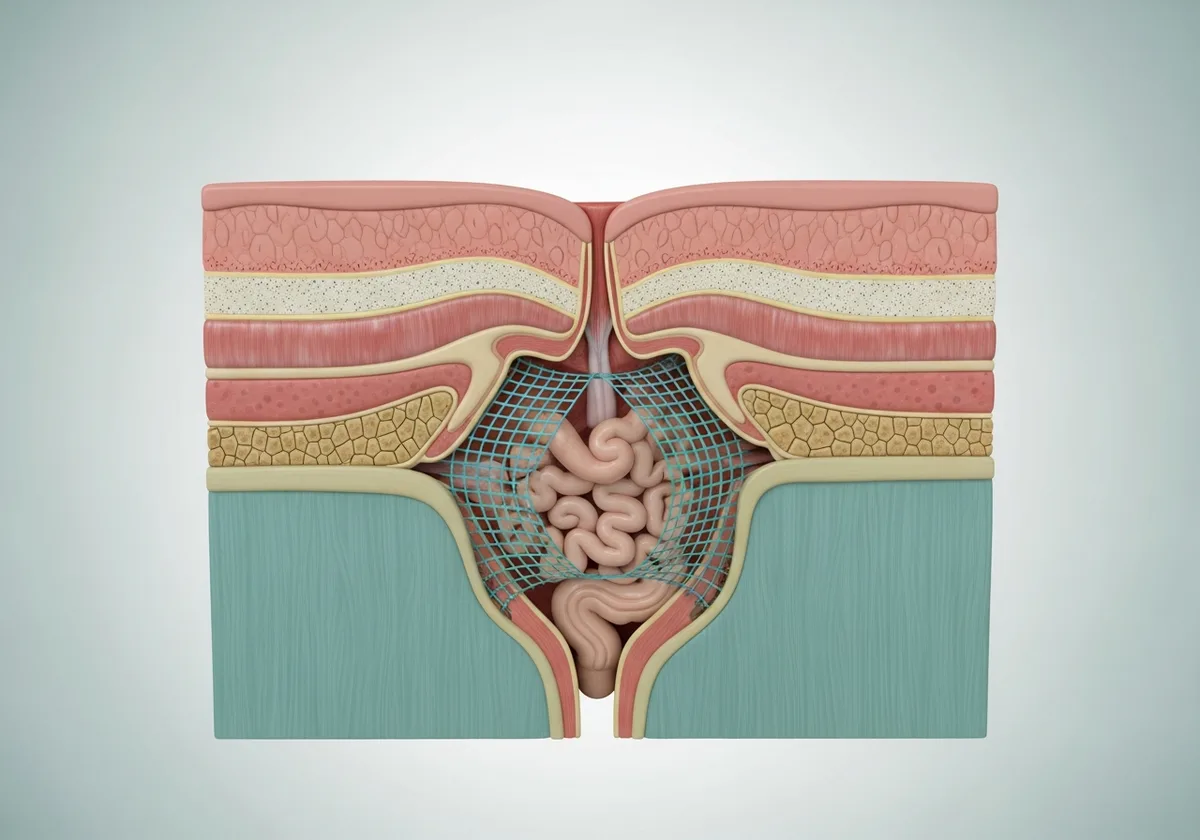
A hernia is a protrusion through a weak area or opening in a tissue layer that normally helps keep structures in place. In an abdominal-wall hernia, tissue may push through a weak spot in the wall. The location can be the groin, navel or an earlier surgical incision. A hiatus hernia is different: part of the stomach moves through an opening in the diaphragm. These conditions can share the word “hernia,” but their symptoms, assessments and treatment discussions are not interchangeable.
An inguinal hernia occurs in the groin; femoral hernias are lower in the groin region; umbilical and epigastric hernias occur around or above the navel; and incisional hernias develop at a previous operation site. A recurrent hernia means one has returned after an earlier repair. The type and size, symptoms, prior operation, health and examination all influence the discussion. A photograph or online symptom checker cannot reliably identify the exact defect or determine whether repair is suitable.
Bring any previous operation note, mesh information or imaging report if you have it. If the bulge appears only at certain times, describe when it occurs and what changes it; do not repeatedly strain or provoke it for a photograph. If the location is painful, firm, discoloured or changing quickly, seek medical attention rather than waiting to document it. The surgeon can explain the diagnosis and whether another condition should be considered.
How a Hernia Assessment Is Made
A consultation usually begins with the history: where the bulge is, when it first appeared, whether it has changed, what activities affect discomfort and whether there have been nausea, vomiting or bowel changes. The clinician may ask about previous abdominal surgery, earlier hernia repair, medicines, allergies and other health conditions. Examination may include assessing the area in different positions or while coughing, when clinically appropriate. Do not attempt to reproduce a painful symptom yourself if doing so feels unsafe.
Imaging is not automatically required for every person. A clinician may discuss ultrasound or another test when the diagnosis is uncertain, the anatomy needs clarification or the result could change planning. Ask what the test is intended to show, whether it is available onsite or requires referral, how to prepare and who will interpret the result. An imaging report should be read with the examination and symptoms. If you have a previous scan, bring the complete report and images if available instead of ordering another test without advice.
The assessment should also identify factors that can affect a planned operation, such as other medical conditions, prior repairs or medicines. Tell the clinician about blood thinners, diabetes treatment, allergies, supplements and any previous reaction to anaesthesia. Do not stop or adjust these medicines without instructions from the clinicians responsible for them. If the recommended next step is unclear, ask the surgeon to explain what has been confirmed and what remains uncertain before deciding.
Observation and Planned Repair: Making an Informed Choice
Some hernias may be monitored after a clinician has assessed the type, symptoms and individual circumstances. Others may lead to a discussion about planned repair. The choice is not made by the size of an online photograph or the presence of a bulge alone. Ask what the clinician sees on examination, what could happen if you observe it, which changes should prompt an earlier review and whether your work or other health conditions affect the options. A support garment does not close the defect and should not substitute for medical advice.
If a planned repair is proposed, ask what benefit the operation is expected to provide for your symptoms or risk, and which alternatives are reasonable. Discuss the important risks and how they apply to your health, including the possibility that a plan may change based on findings. Ask who will provide the operation, where it will take place, what follow-up is planned and what the written estimate includes. You may ask for time to consider a non-urgent recommendation or seek another opinion.
Observation should still include a clear safety plan. Ask how often you should be reviewed, whether you need to return if the bulge changes and what symptoms require urgent care. Sudden severe pain, a hard or discoloured bulge, repeated vomiting, fever or inability to pass stool or gas needs urgent assessment. Do not wait for the next routine appointment if these occur. Read the clinic's general hernia symptoms guide for background, but rely on your treating clinician for a plan.
Open and Laparoscopic Repair: Points to Discuss
Open and laparoscopic repairs use different operative approaches, but the label alone does not establish which is best for an individual. The surgeon considers the hernia type and site, whether one or both sides are involved, previous operations, the person's health, anaesthesia considerations and the available facilities. A minimally invasive method may be suitable in selected situations, while open repair may be reasonable in others. Ask the surgeon to explain the reason for the recommendation in your case rather than choosing an approach based only on the smallest incision or a general online comparison.
Useful questions include how the repair is planned, whether mesh is expected, what would make the surgeon change the approach and what risks are relevant to your history. Ask about pain control, wound care, possible admission, support at home and follow-up. Do not assume that the same approach is suitable for a recurrent, large, bilateral or previous-incision hernia as for a first-time uncomplicated case. The surgical team can discuss the specific plan after examining you and reviewing prior operation records.
Before consenting, make sure you understand the expected benefit, alternatives, important risks and recovery needs. Ask who to contact if you have a question before admission and whether the operation is performed at the clinic or another facility. Confirm current service availability; this page cannot confirm a particular theatre, technique or admission schedule. A procedure should be planned only after an individual clinical assessment and discussion with the treating team.
Mesh, Repair Materials and Consent
People often search whether mesh is “safe” or whether a hernia can be repaired without it. Neither question has one universal answer for every hernia. The surgeon may consider the defect, repair method, recurrence history, tissue quality, patient health and the evidence relevant to that procedure. Mesh may be recommended in some circumstances, while the options for another type of hernia can differ. Ask what material is being proposed and why it is appropriate for your specific repair.
Before a planned operation, ask about expected benefits, alternatives, possible complications, recurrence, wound care and how the repair will be followed. If mesh is discussed, ask how it is placed, what material information will be recorded and who should be contacted if you develop a concern later. The goal is not to compare products from an online advertisement; it is to understand the plan chosen by the treating surgeon. If you previously had a repair, share the date, facility and any implant card or operation summary available.
Consent is a conversation, not only a signature. Ask the surgeon to explain unfamiliar terms, which risks are most relevant to you and what may happen if the operation is deferred. Make sure you know who will answer questions about anaesthesia, medicines, costs and post-operative follow-up. A non-urgent decision can be considered after the discussion; emergency symptoms require prompt treatment and should not be delayed while searching product forums or testimonials.
Preparing for a Planned Hernia Operation
Preparation instructions depend on the planned procedure, anaesthesia and individual health. The hospital or treating team should explain when to arrive, whether fasting is required, what medicines to take or hold, and whether someone should accompany you. Do not use a generic checklist from another hospital. People who use blood thinners, diabetes medicines, inhalers or other regular treatment should ask the responsible clinician for specific instructions well in advance. Never stop a prescription on your own because an operation is scheduled.
Before the date, confirm the location, admission plan, estimate, insurance pre-authorisation and the contact number for questions. Ask whether the estimate includes the surgeon, anaesthesia, room, tests, medicines, mesh or other materials, and follow-up; request clarification about possible exclusions. Bring identification, relevant reports, prescriptions, allergy information and prior operation records. If your health changes, you develop fever or you are unsure about a medicine, contact the treating team rather than hiding the information or deciding alone.
Plan practical support for the period after discharge according to the advice you receive. Ask about transport, wound care supplies, diet, bathing, work and follow-up. Confirm whether you need help at home and what number to call outside routine hours. The exact preparation is patient-specific; this page does not set fasting rules or medication changes. If urgent hernia symptoms develop before the planned date, seek urgent care rather than waiting for the operation appointment.
Recovery, Wound Care and Follow-Up Questions
Recovery varies by repair, anaesthesia, overall health and the work a person needs to do. Before discharge, ask the team to explain wound care, bathing, medicines, walking, lifting, exercise, driving and when to return. Find out whether a dressing should remain in place, how to contact the team about a wound concern and which symptoms are expected versus concerning. Do not compare your progress with a relative's recovery; even similar operations can have different circumstances.
Keep follow-up appointments or call the clinic if you are uncertain whether one is needed. Bring questions about pain, swelling, a new lump, appetite, bowel activity or the timing of work and exercise. Do not begin intense activity simply because discomfort has improved, and do not stay in bed longer than the team recommends without a reason. If you have a chronic condition or take medicines that affect healing, ask whether any additional review is planned.
Seek medical advice promptly for a worsening wound, fever, increasing redness, persistent vomiting or pain that is not controlled by the plan you were given. Sudden severe abdominal or groin pain, a hard painful bulge, skin colour change, inability to pass stool or gas, fainting or breathing difficulty needs urgent care. Use the discharge contact number for post-operative concerns, and use emergency services for severe symptoms. Online information cannot assess a wound or decide whether a complication is present.
Work, Exercise, Travel and Everyday Activities
There is no reliable universal number of days after which every person can lift, drive, exercise or return to work. A desk job, heavy manual work, long-distance driving and sport place different demands on the body. The operation, anaesthesia, pain medicines, recovery and other conditions also matter. Before leaving hospital, ask for guidance that names your actual activities. If your job involves lifting or prolonged standing, describe the duties so that the team can give practical advice or a work note where appropriate.
Driving should wait until you can move comfortably and safely, are not impaired by sedating pain medicines and have followed the treating team's instructions. Ask about travel, exercise and sexual activity if these are concerns; it is better to ask than to rely on a generic social-media timetable. If a task causes sharp or increasing pain, stop and ask the treating team whether the plan should change. Do not interpret this as a reason for permanent inactivity; activity progression should be individualized.
For a hernia that has not been repaired, ask which daily activities are reasonable and whether a task that causes pain should be modified. Avoid extreme self-imposed restrictions, repeated straining to test the bulge or forcing a painful lump back into place. If constipation or straining is an issue, ask whether changes in fluids, fibre, medicines or activity fit your health. These measures may support comfort but do not repair the defect. New severe symptoms require urgent care.
Hernia Surgery Cost, Insurance and Written Estimates
A search for “hernia surgery cost in Bathinda” cannot produce a reliable personal price without an assessment. The estimate may depend on hernia type and complexity, one or both sides, previous repair, open or laparoscopic approach, mesh or other materials, anaesthesia, investigations and hospital stay. Other health conditions can affect the plan. The current consultation or procedure fee is not published in this guide, so contact the clinic for a current written estimate after the clinician has reviewed your case.
Ask for an itemized estimate and clarify what is included: surgeon and anaesthesia fees, room, tests, medicines, materials, expected admission, follow-up and any possible additional charges. Ask whether the estimate can change if the findings or planned approach change. If you have insurance, verify your policy's waiting periods, exclusions, co-payment, room limits and pre-authorisation requirements directly with the insurer and the hospital. A hospital's association with an insurer does not by itself guarantee approval for a particular case.
Keep written copies of the clinical plan, cost estimate and insurer response. If the estimate is unclear, ask the billing staff to explain a line item before admission. Do not base a medical decision solely on an online price or promise of a package; compare the care plan, facility, team support and follow-up as well. For current availability, location, consultation fee and appointment details, call +91 82641-60001 or use the clinic contact page.
Support for Family Members and Caregivers
A family member may help someone prepare for a consultation or planned operation, especially if the patient is anxious, has difficulty travelling or needs support remembering instructions. With the patient's permission, a companion can help organize reports, write down questions and take notes about the plan. The patient should still be encouraged to describe symptoms in their own words and ask anything that is unclear. A relative's recollection can add context, but it should not replace the patient's account or the clinician's examination.
Before a planned admission, ask the treating team what help may be needed at home and for how long; the answer depends on the repair, the person's health and the work they normally do. Confirm transport arrangements, who will receive discharge instructions and how to contact the team. Ask whether the patient should avoid driving after anaesthesia or while taking medicines that cause drowsiness. These instructions vary, so do not rely on another patient's discharge sheet or a general internet timeline.
Caregivers can help by keeping a copy of the medicine list, allergy information, operation records and discharge instructions in one place. If a new symptom appears, write down when it began and contact the clinical team using the route provided. Do not give leftover medicine, apply an unapproved product to a wound or try to push a painful bulge back into place. Sudden severe pain, persistent vomiting, fever, a hard or discoloured bulge, fainting or breathing difficulty needs urgent medical attention.
Comparing a Care Plan, Not Just a Procedure Name
When comparing providers or recommendations, look beyond phrases such as “keyhole,” “advanced” or “best.” Ask who will assess you, which clinician will perform a proposed operation, where it will take place and how the team will support follow-up. Check that you can discuss the diagnosis, alternatives, material risks, anaesthesia, recovery, emergency contact and written estimate before making a non-urgent decision. A clinic's overall experience figures describe broad activity; they do not predict an individual's outcome or replace questions about the surgeon's experience with a particular hernia type.
Ask whether the recommendation fits your hernia and personal health, and whether observation or a second opinion is reasonable. Confirm whether any test or operation is available at the named facility or requires a referral elsewhere. If a price is quoted, ask what it includes and whether material, room, medicines or follow-up may be charged separately. For insurance, verify current policy terms and pre-authorisation directly rather than assuming that a listed insurer will cover every service.
Be cautious with guarantees of a “permanent cure,” claims that one approach has no risks, pressure to decide on a non-urgent operation immediately, or online reviews presented without a verifiable source. You can ask for time to understand a planned recommendation. A clear, individualized explanation and a realistic follow-up plan are more useful than a promise that cannot be supported. If symptoms are urgent, however, prioritize immediate medical assessment instead of delaying care to compare routine appointments.
Published Hernia Case Reports and Patient Guides
Read the hernia symptoms and treatment guide or the Hindi hernia guide. Published case reports describe individual experiences, not typical outcomes: read a case report about emergency hernia care and recurrent incisional hernia case.
Hernia Surgery in Bathinda: FAQs
Who is the best hernia surgeon in Bathinda?
Compare relevant surgical training, experience with your type of hernia, facility support, clear discussion of risks and a follow-up plan. The clinic lists Dr Raman Garg as a surgical gastroenterologist; ask about experience relevant to your diagnosis.
How much does hernia surgery cost in Bathinda?
Cost depends on the hernia, one or both sides, the proposed approach, mesh or other materials, tests, anaesthesia and hospital stay. Ask for a current written estimate after assessment and confirm insurance terms.
Can a hernia be cured without surgery?
Some hernias may be monitored after clinical assessment. A belt may ease discomfort for some people but does not close the defect. Ask the surgeon about observation, repair options and warning signs for your specific hernia.
How many days in hospital after hernia surgery?
The stay varies with the type of repair, health, anaesthesia and recovery. Ask the treating team what is expected for your case and what would change the plan.
When can I go back to work after repair?
Timing depends on the operation, recovery and work duties, especially lifting or physical work. Follow your discharge instructions and ask the surgeon before driving, exercising or lifting.
Is mesh safe for hernia repair?
Mesh has potential benefits and risks, and it is not the only consideration in every case. Ask why it is being proposed, what alternatives apply and how the material and repair will be followed up.
Can both sides be done together?
A combined repair may be considered in some cases, but suitability depends on the diagnosis, health and planned approach. Ask the surgeon to explain the benefits and added risks for you.
Is hernia surgery covered by insurance?
Coverage depends on your policy, waiting periods, exclusions and the hospital's current insurer or TPA arrangements. Confirm eligibility and pre-authorisation with both the insurer and clinic before admission.
What are common early signs of a hernia?
Some people notice a bulge in the groin, around the navel or near a previous incision that changes with coughing or standing. Others have discomfort or no obvious lump. A clinician must assess a new or changing bulge; symptoms alone cannot confirm the type.
Can exercise or a hernia belt make a hernia go away?
Exercise or a support belt does not close the abdominal-wall defect. Activity advice and whether observation is suitable depend on the hernia and your health. Ask the surgeon what is safe for you, especially if an activity causes pain.
Is laparoscopic hernia repair always better than open surgery?
No single approach is best for everyone. The choice depends on hernia type, prior repairs, health, examination and the surgeon’s assessment. Ask about the reason for the recommendation, alternatives and individual risks.
What should I do while waiting for a hernia appointment?
Avoid an activity that clearly worsens pain and ask the clinic for advice about your specific situation. Do not try to force a painful or firm bulge back in, and do not let a belt delay assessment. Sudden severe pain, vomiting or a discoloured bulge needs urgent care.
How do I know if a hernia is an emergency?
Seek urgent care for sudden severe pain, a hard or very tender bulge that will not reduce, skin colour change, repeated vomiting, fever or inability to pass stool or gas. Do not wait for a routine appointment if these symptoms occur.
Can an ultrasound confirm every hernia?
Not always. A clinician may diagnose some hernias from history and examination, while imaging may be considered when the diagnosis or anatomy is unclear. The appropriate test depends on the clinical question. Bring any prior reports and ask what a proposed scan would add.
What is the difference between an inguinal and an umbilical hernia?
An inguinal hernia is in the groin; an umbilical hernia is at or near the navel. Other lumps can look similar, so location alone does not confirm the diagnosis. A clinician should assess a new or changing bulge.
Will I need mesh for hernia repair?
Mesh may be discussed for some repairs, but the decision depends on the hernia, operation and individual factors. Ask why it is recommended, what alternatives exist, what risks matter in your case and how the repair will be followed up.
When can I lift weights or drive after hernia surgery?
There is no single timetable for everyone. Follow the discharge instructions and ask the treating surgeon about driving, lifting, exercise and work based on your operation, medicines, recovery and job duties. Do not use a generic online schedule.
Can I wait if my hernia does not hurt?
A painless bulge still deserves assessment, but whether monitoring is reasonable depends on the type, examination and your health. Ask the surgeon what changes should prompt earlier review and which symptoms need emergency care.
What should I bring to a hernia surgery consultation?
Bring prior operation notes, imaging reports, a medicine and supplement list, allergies and details of any earlier hernia repair or mesh. Note when the bulge appears and how symptoms change. Do not delay urgent care to collect records.
Clinic Location and Appointment Details
Bombay Gastro & Cancer Institute is listed at Power House Road, near Street No. 10, Bathinda 151001. The website lists OPD Monday to Saturday, 10 am to 3 pm. Call +91 82641-60001 or use the contact page to confirm current hours, appointment availability and the consultation fee before travelling.