10,000+
Laparoscopic Surgeries
By case
Individual care planning
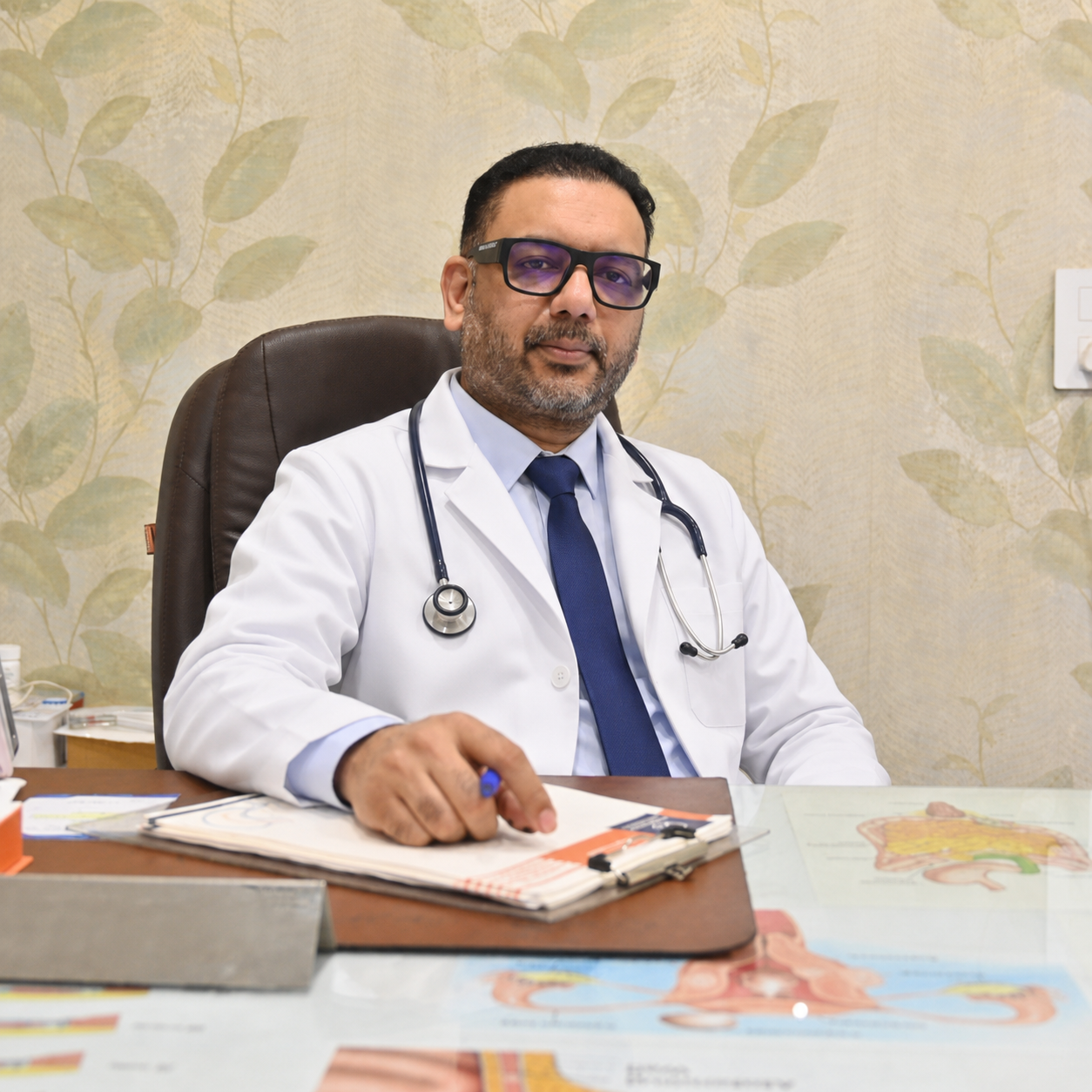
Dr. Raman Garg — Gastro Surgeon in Bathinda
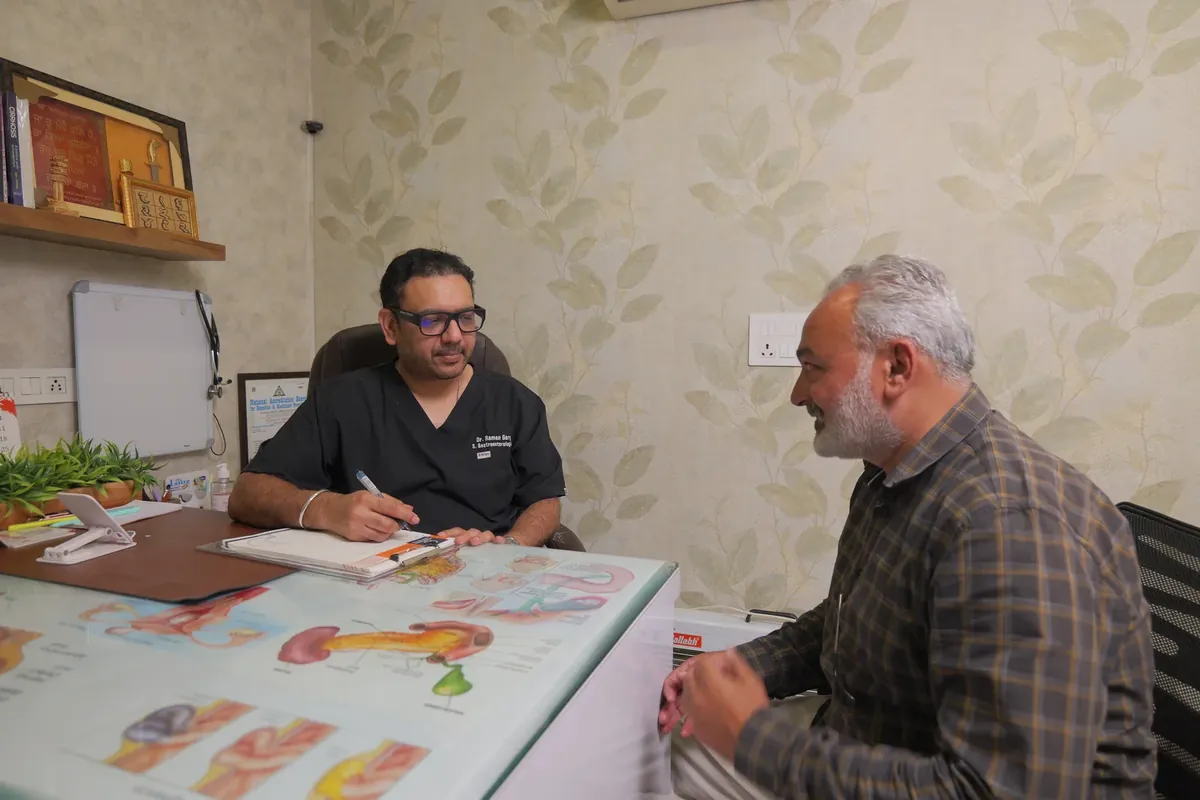
Patients seeking a gastro surgeon in Bathinda can arrange an assessment with Dr. Raman Garg at Bombay Gastro & Cancer Institute. A surgical gastroenterologist evaluates digestive conditions that may require an operation. Many digestive problems are managed medically or need another specialist, so a consultation should first clarify the diagnosis and appropriate next step.
Dr. Raman Garg has 20+ years of experience and has performed 10,000+ laparoscopic surgeries overall. The consultation covers the diagnosis, available options, relevant risks, alternatives and follow-up for your health.
What surgical gastroenterology means: The specialty evaluates digestive conditions that may need an operation. Some symptoms are managed medically, so the clinician may recommend another specialist or coordinated care when appropriate.
What Is a Gastro Surgeon?
A gastro surgeon is a surgical gastroenterologist who assesses selected digestive conditions that may need an operation. The right specialist and treatment plan depend on the diagnosis, training, facility and the patient's health. A consultation may also lead to non-surgical care or referral to another clinician.
| Care topic |
Medical gastroenterology |
Surgical gastroenterology |
| Typical focus |
Digestive condition assessment, non-operative care and coordination of tests or referrals. |
Assessment of selected digestive conditions that may need an operation, with alternatives and risks discussed. |
| Possible next steps |
Medicines, further evaluation, an endoscopic procedure or referral may be considered. |
Surgical planning, non-surgical care or referral may be considered after individual review. |
| What to confirm |
Which clinician and tests are appropriate for the diagnosis. |
The clinician's qualifications, facility and current procedure availability. |
Specialty labels do not guarantee that a particular test or operation is available at every clinic. Confirm the clinician's scope, facility, current services and referral arrangements before booking.
Digestive Surgery Topics and Options in Bathinda
The topics below are for patient information and do not confirm that every listed procedure is currently available at this clinic. Suitability, procedure availability and referral arrangements must be confirmed with the clinician and facility after assessment.
Assessment and discussion of open or laparoscopic repair options for selected hernias.
Assessment and treatment planning for selected gallbladder conditions.
Suspected appendicitis needs prompt clinical assessment. If an operation is considered, the clinician explains timing, approach, risks and alternatives.
Treatment depends on the confirmed condition and severity. A clinician can explain non-surgical care, procedures, risks and follow-up options.
Liver masses, cysts and other findings need specialist evaluation. Any treatment plan depends on investigations and multidisciplinary review when appropriate.
Pancreatic conditions may need imaging, specialist review or referral. An operation is considered only after individual assessment.
Cancer care depends on diagnosis, staging and overall health. The care team can explain investigations, multidisciplinary review, treatment options and referrals.
Eligibility and procedure options depend on clinical criteria, health history and a specialist assessment.
Bile-duct problems require investigation. Ask whether endoscopic care, surgery or referral is appropriate and confirm current procedure availability.
Colorectal conditions may need medical care, endoscopy, surgery or referral depending on the diagnosis and individual assessment.
Reflux and hiatus hernia care may include non-surgical options. Surgery is considered only for selected cases after appropriate assessment.
Urgent abdominal symptoms
Seek emergency assessment for severe or rapidly worsening pain, vomiting blood, fainting or other emergency symptoms.
Experience and Treatment Planning
- 20+ years of experience: Ask about experience relevant to the diagnosis and procedure being discussed.
- 10,000+ laparoscopic surgeries overall: Across multiple procedure types.
- Procedure-specific discussion: The surgeon explains the proposed approach, alternatives and material risks.
- Testing and referrals: Investigations and other specialist input depend on the clinical assessment.
- Cost and insurance: Confirm current charges, coverage and pre-authorisation with the clinic and insurer.
- Appointment availability: Call the clinic to arrange a consultation and ask which reports to bring.
Digestive Conditions a Gastro Surgeon May Assess in Bathinda
Examples are not a diagnosis or a guarantee of treatment at this clinic. The appropriate specialist, investigations and treatment depend on clinical review; a referral may be recommended.
Stomach & Oesophagus
- GERD (acid reflux) and persistent reflux symptoms
- Peptic ulcer disease, gastritis, H. pylori infection
- Stomach and oesophageal cancer requiring specialist evaluation
- Hiatal hernia and swallowing difficulty
Liver Conditions: Assessment and Care
- Fatty liver and metabolic liver conditions
- Cirrhosis and related complications such as portal hypertension or ascites
- Hepatitis B and C requiring medical evaluation
- Liver masses, cysts and other imaging findings
- Jaundice and abnormal liver tests requiring assessment
Gall Bladder & Bile Duct
- Gallstones — assessment and discussion of suitable treatment options
- Common bile duct stones and possible obstruction
- Gallbladder masses and other abnormal findings
- Bile duct narrowing or leak requiring specialist review
Pancreatic Conditions and Care
- Acute or chronic pancreatitis
- Pancreatic cysts and fluid collections
- Pancreatic masses requiring further evaluation
Colon, Rectum & Anorectal
- Colorectal cancer and suspicious bowel findings
- Inflammatory bowel disease, including Crohn's disease and ulcerative colitis
- Colon polyps and changes in bowel habits
- Piles (haemorrhoids), fissure and fistula symptoms
- Pilonidal sinus and other anorectal concerns
Patient Feedback and Review Information
Patient reviews describe personal experiences and are not a substitute for medical advice or a prediction of another patient’s outcome. Read reviews on the original platform and check their date and context. View patient feedback.
Published Case Reports and Further Reading
Case reports describe individual clinical experiences. They do not show what another patient should expect or guarantee a particular result. Read the clinic's published case studies, including a pancreatic pseudocyst case report and a gastric outlet obstruction case report.
Gastro Surgeon in Bathinda: FAQs
How do I arrange a gastro surgeon consultation in Bathinda?
Dr. Raman Garg consults at Bombay Gastro & Cancer Institute in Bathinda. Use the contact page or listed phone number to confirm appointment availability, current clinic hours and which reports to bring.
What is the difference between a gastro surgeon and a gastroenterologist?
A gastroenterologist evaluates digestive conditions and may manage them medically or coordinate tests and procedures. A surgical gastroenterologist has specialist training in operations for selected digestive conditions. The suitable clinician depends on the diagnosis.
Which conditions are assessed by a surgical gastroenterologist?
A surgical consultation can assess selected hernias, gallbladder problems, appendicitis and other digestive conditions. The clinician reviews symptoms, reports and health before advising on a procedure or referral.
Is laparoscopic surgery suitable for every patient?
No. The approach depends on the diagnosis, anatomy, previous operations, urgency and overall health. The surgeon should explain the expected benefits, alternatives, risks and possibility that the planned approach may change.
How do I ask about consultation fees?
Contact the clinic to confirm current consultation charges and ask whether any test or procedure has a separate fee. Check insurance coverage and pre-authorisation directly with the insurer.
How do I confirm clinic details?
Use the contact page or listed phone number to verify the address, clinic hours, appointment availability and reports to bring. For severe or rapidly worsening symptoms, seek emergency care instead of waiting for a routine appointment.
Book Appointment with Gastro Surgeon in Bathinda
📍 Address
Bombay Gastro & Cancer Institute
Power House Rd, Near St. No 10
Bathinda, Punjab 151001
Specialised Services by Dr. Raman Garg