An inguinal hernia (groin hernia) occurs when tissue pushes through a weak area in the lower abdominal wall. A groin bulge or discomfort can have other causes, so a clinician should review symptoms, examination findings and any relevant reports. Dr. Raman Garg consults at Bombay Gastro & Cancer Institute, Bathinda. Treatment options and procedure availability should be confirmed with the clinic after an individual assessment. Read the main hernia surgery in Bathinda guide for an overview of repair options.
The inguinal canal is a passage in the lower abdominal wall through which blood vessels and the vas deferens (in men) or round ligament (in women) pass. An inguinal hernia occurs when the abdominal contents (fat or intestine) push through a weak spot in this canal, creating a visible lump in the groin.
Seek urgent medical assessment. A painful bulge that cannot be pushed back, sudden severe pain, persistent vomiting, fever or skin colour changes can signal a serious problem. Do not wait for a routine appointment; go to the nearest emergency department or contact local emergency services.
TAPP and TEP are two laparoscopic approaches that a surgeon may discuss for selected inguinal hernias. Their suitability and current availability depend on the patient's condition, prior surgery and clinical assessment; ask the clinic which options are offered.
Some hernia repairs use mesh; other techniques or materials may be considered in selected cases. The surgeon should explain the proposed material, expected benefits, possible risks and alternatives for the individual patient. Ask what product and follow-up plan apply to your operation.
The decision to monitor or repair an inguinal hernia depends on symptoms, examination findings, hernia characteristics and overall health. A clinician can explain reasonable options and when review is needed. Seek urgent care for severe or rapidly worsening symptoms.
Dr. Raman Garg Bombay Gastro & Cancer Institute, Bathinda mein consultation karte hain. TAPP, TEP ya open repair ki suitability aur vartamaan availability confirm karne ke liye clinic se sampark karein; treatment plan clinical assessment ke baad tay hota hai.
Mesh ka use har repair mein zaroori nahi hota. Surgeon aapke hernia aur health ke hisaab se mesh ke fayde, risks aur alternatives samjhayenge. Apne case ke liye plan treating team se confirm karein.
Recovery ka samay repair, aapki sehat, kaam ki prakriti aur healing par depend karta hai. Discharge instructions follow karein aur driving, kaam, exercise aur lifting kab shuru karna safe hai, treating team se poochhein.
Kuch patients mein dono taraf ka repair ek operation mein consider kiya ja sakta hai, lekin yeh findings, health, operation plan aur clinician ke assessment par depend karta hai. Surgeon options aur risks samjhayenge.
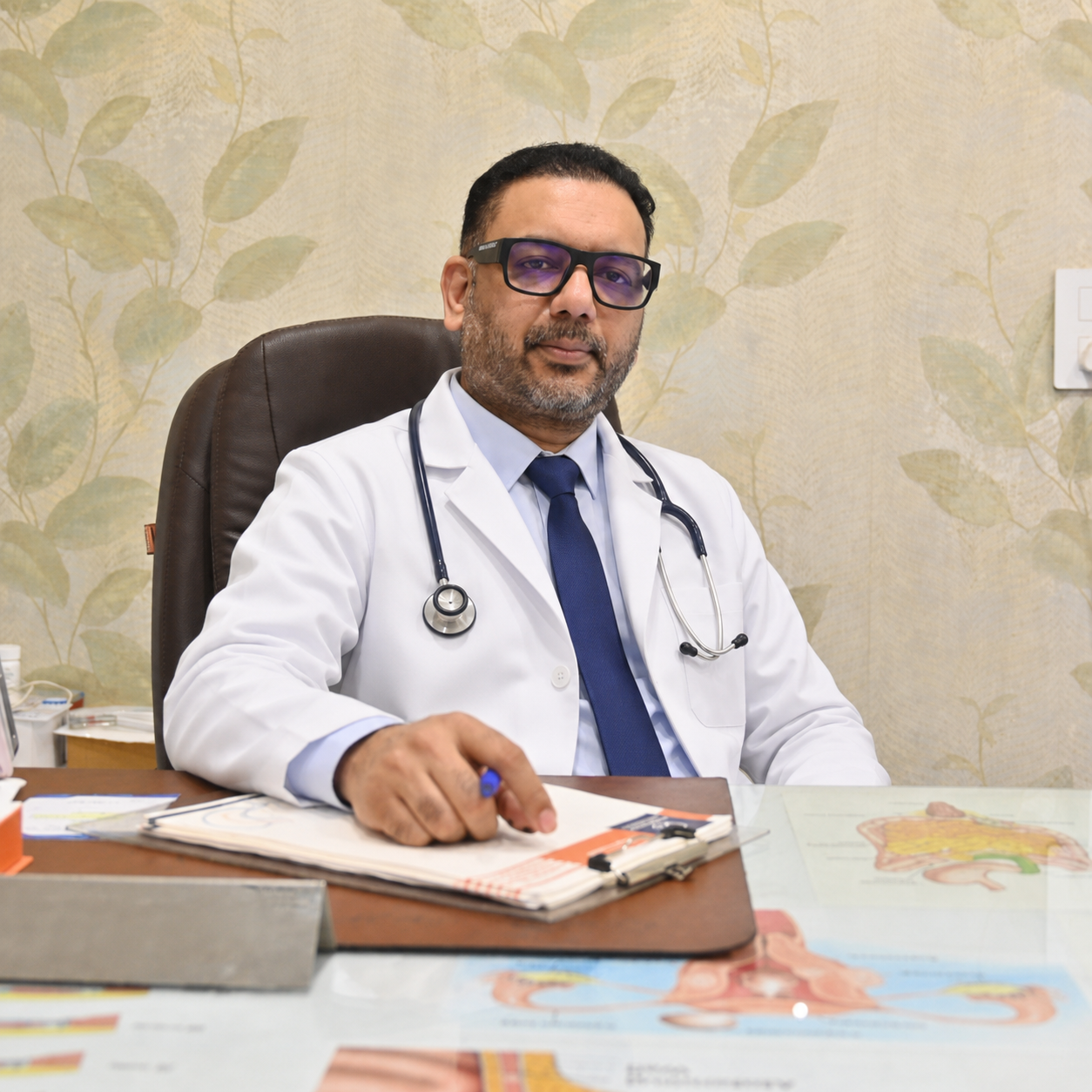
MS (Surgery) · MCh (Surgical Gastroenterology)
Surgical Gastroenterology, Bathinda
For hernia, gallstones, liver concerns, piles or another digestive problem, arrange an assessment with Dr. Raman Garg. The right treatment depends on your diagnosis and health.
