
A patient presented to Dr. Raman Garg with severe abdominal pain, progressive abdominal distension, repeated vomiting and an irreducible, painful swelling over the anterior abdominal wall. Evaluation was suggestive of acute intestinal obstruction due to a strangulated abdominal wall hernia, a true surgical emergency. The patient was immediately taken for emergency surgery.
What Was Found During Surgery?
Exploration revealed a loop of distal ileum trapped within the abdominal wall defect, producing a closed-loop intestinal obstruction. The blood supply had been completely compromised and approximately 30 cm of distal ileum had become gangrenous, dark, swollen, congested and non-viable. Fortunately, there was no bowel perforation or faecal contamination.

Emergency Surgical Management
Dr. Raman Garg performed emergency exploratory laparotomy, released the constricting fascial ring, reduced the incarcerated bowel and resected the gangrenous segment. A functional end-to-end stapled ileo-ileal anastomosis was created using an NTLC-75 Linear Cutter. Mesenteric division was performed using a LigaSure Vessel Sealing System, followed by excision of the hernia sac and primary anatomical repair of the abdominal wall defect.
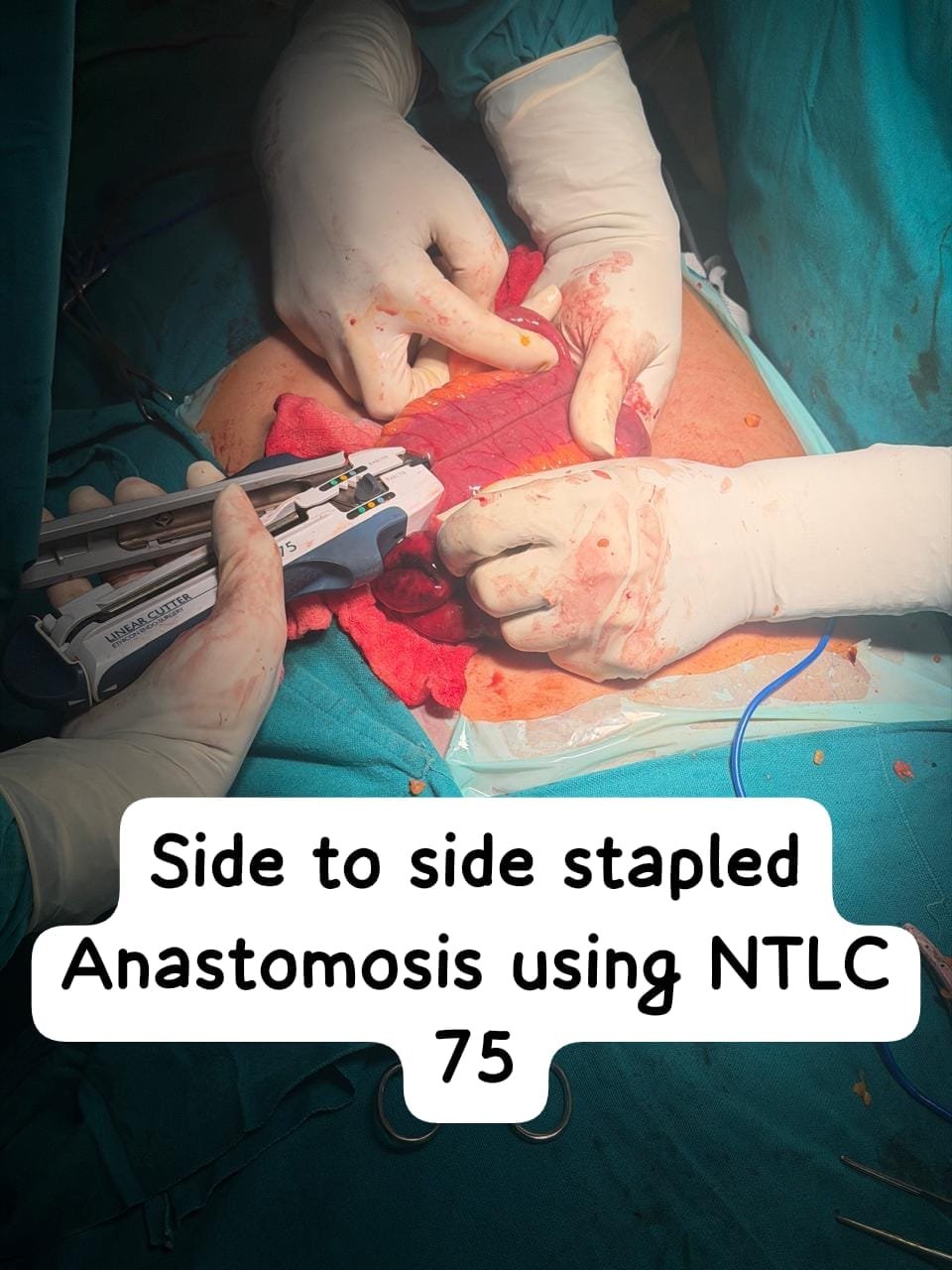
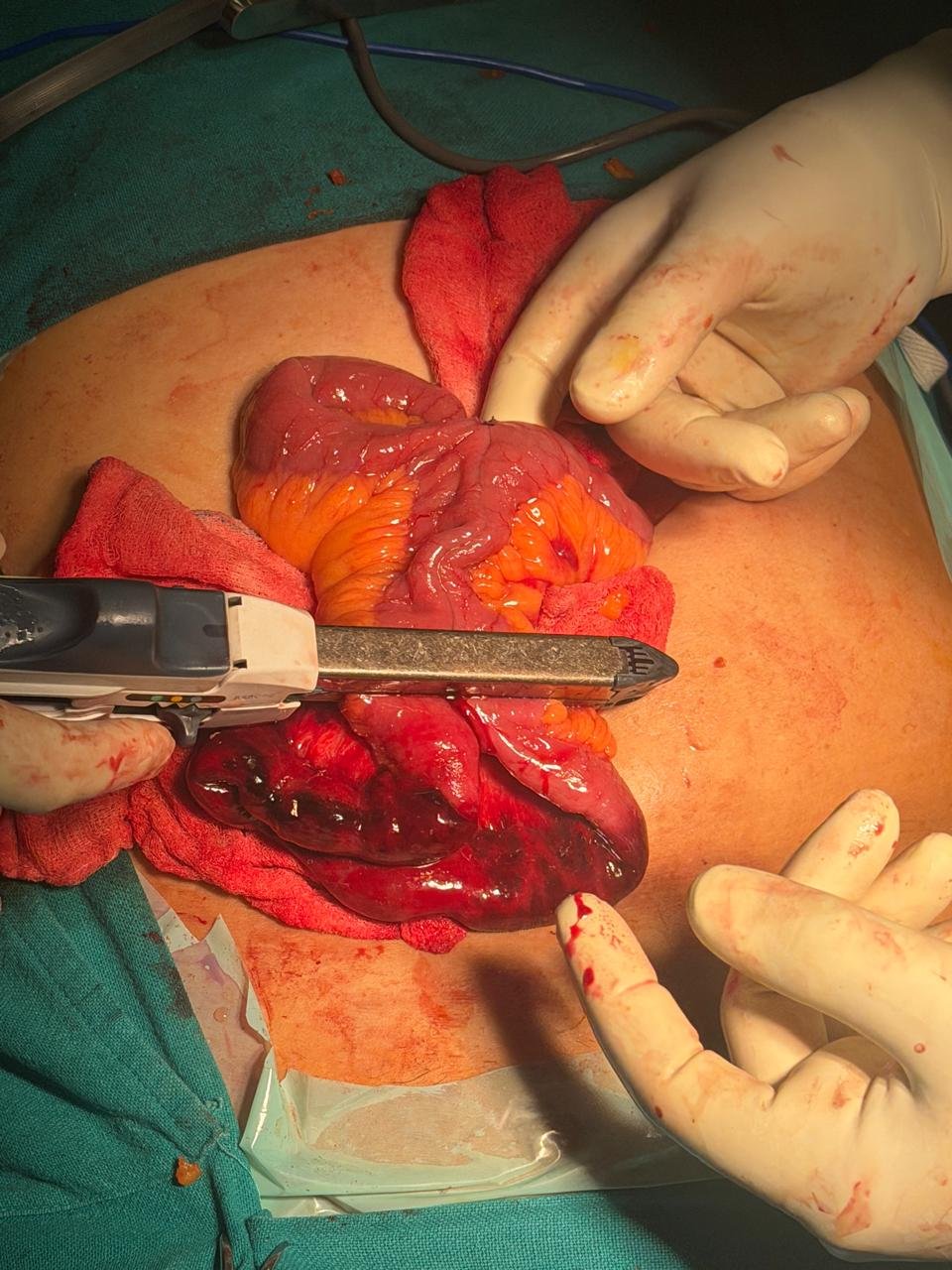

The remaining small intestine, ileocaecal junction and colon were healthy and viable. The patient tolerated the procedure well and remained haemodynamically stable throughout surgery.
Why Is This Condition Dangerous?
A strangulated hernia can cut off the blood supply to the intestine. Intestinal gangrene can develop within hours, followed by bowel perforation, peritonitis, septic shock and multi-organ failure. Early recognition and urgent surgery are critical.
Why Was Bowel Resection Necessary?
Once intestine becomes gangrenous, it cannot recover. Leaving dead bowel inside the abdomen can cause perforation, generalised peritonitis, septicaemia and death. The definitive treatment is removal of the non-viable segment followed by safe intestinal reconstruction.
Highlights of This Surgery
- Emergency life-saving surgery
- Approximately 30 cm of gangrenous ileum successfully removed
- Stapled functional end-to-end ileo-ileal anastomosis
- No bowel leak or faecal contamination
- Primary repair of the abdominal wall defect
- Stable recovery after surgery
Learning Point
Never ignore a painful hernia swelling. If a hernia becomes painful or irreducible, or is associated with vomiting, abdominal distension or inability to pass stool or gas, seek immediate surgical care. Early intervention can prevent bowel gangrene and save life.
Case Summary
| Operating Surgeon | Dr. Raman Garg |
|---|---|
| Hospital | Bombay Gastro & Cancer Institute, Bathinda |
| Condition | Strangulated abdominal wall hernia with acute intestinal obstruction |
| Finding | Approximately 30 cm gangrenous distal ileum |
| Procedure | Emergency laparotomy, bowel resection and stapled ileo-ileal anastomosis |
| Hernia treatment | Hernia sac excision and primary abdominal wall repair |
| Outcome | Stable recovery after emergency surgery |
Frequently Asked Questions
Can a hernia become life-threatening?
Yes. A strangulated hernia can cut off intestinal blood supply, causing bowel gangrene, perforation, severe infection and death if not treated urgently.
What are the warning signs?
Sudden severe pain, a painful swelling that cannot be pushed back, vomiting, abdominal distension, fever and inability to pass stool or gas require emergency medical attention.
Why was part of the intestine removed?
The trapped bowel had lost its blood supply and become gangrenous. Dead bowel cannot recover and must be removed to prevent life-threatening infection.
Can a person live normally after removal of 30 cm of small intestine?
Yes. Removing a short segment such as 30 cm usually does not affect long-term digestion or nutrition when the remaining bowel is healthy.
Patient identity has been withheld to maintain confidentiality. This case is shared for educational purposes only. Individual diagnosis and treatment should always be based on evaluation by a qualified medical professional.


