
Rectal foreign bodies are uncommon but potentially serious surgical emergencies. Management depends on the size, shape, location and nature of the object, as well as complications such as perforation or peritonitis. This case series describes two challenging large rectal foreign bodies successfully removed through a transanal approach, avoiding major abdominal surgery.
Patient identities and circumstances have been withheld to preserve confidentiality.
Case 1: Transanal Extraction of a Large Bottle Gourd
Clinical Presentation
An adult male presented with a retained large bottle gourd in the rectum, severe rectal discomfort, inability to expel the object and lower abdominal pain. Imaging showed that the object was confined to the rectum without free air or perforation.
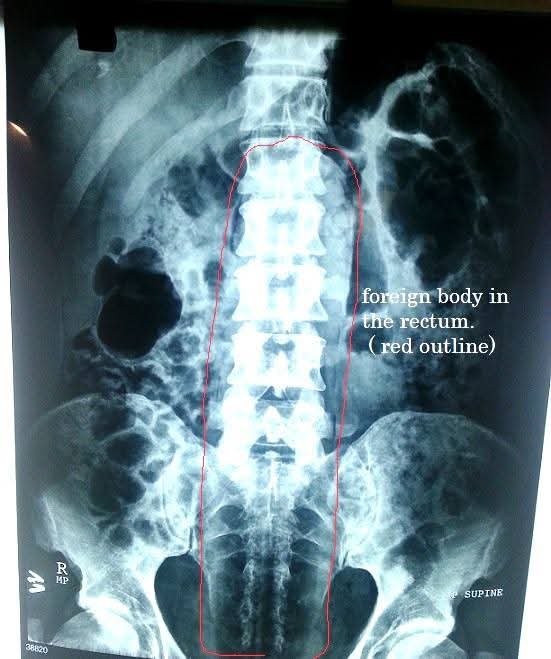
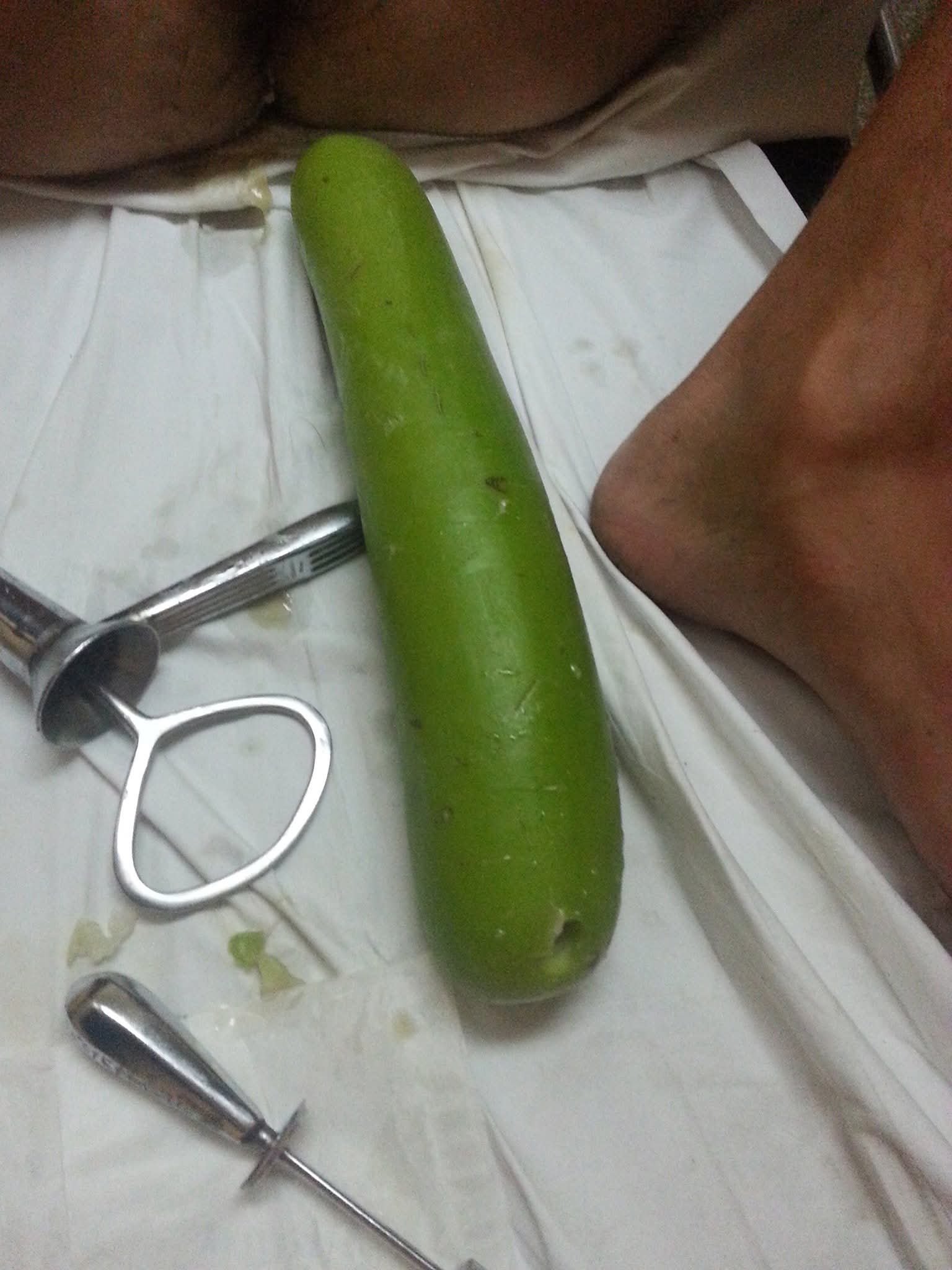
Surgical Management
Under appropriate anesthesia, a proctoscope was introduced for direct visualization. Because the smooth, large object could not be grasped securely, a myoma screw was carefully inserted to obtain fixation. A small opening was created in the object for additional finger grip, while gentle suprapubic pressure helped disengage the vacuum effect.
Controlled traction with continuous visualization allowed intact extraction through the anal canal without rectal injury. Post-extraction proctoscopy showed no significant mucosal tear or perforation, and the patient recovered uneventfully after observation and counselling.
Case 2: Piecemeal Transanal Removal of a Large Turnip
Clinical Presentation
Another adult male presented with a large retained turnip lodged deep within the rectum, progressive rectal pain, inability to remove the object and increasing pelvic discomfort. Imaging confirmed a large rectal foreign body without perforation.
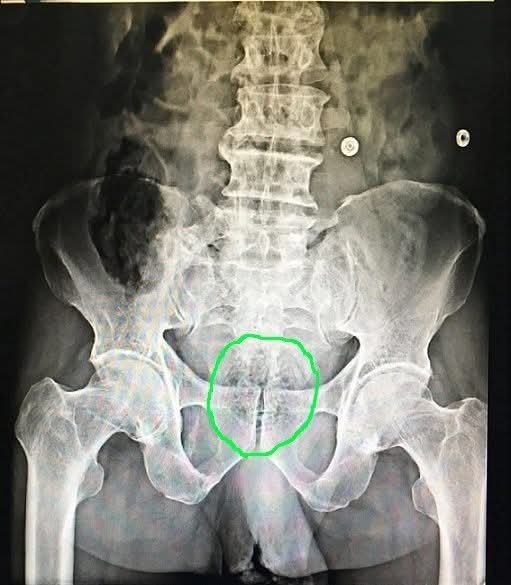
Surgical Management
Under anesthesia, proctoscopy was performed. Initial extraction with a myoma screw was unsuccessful because the rounded, friable object could not be securely fixed. Rather than proceeding directly to laparotomy, the surgical team carefully reduced its size under direct vision and removed it piecemeal through the anal canal.
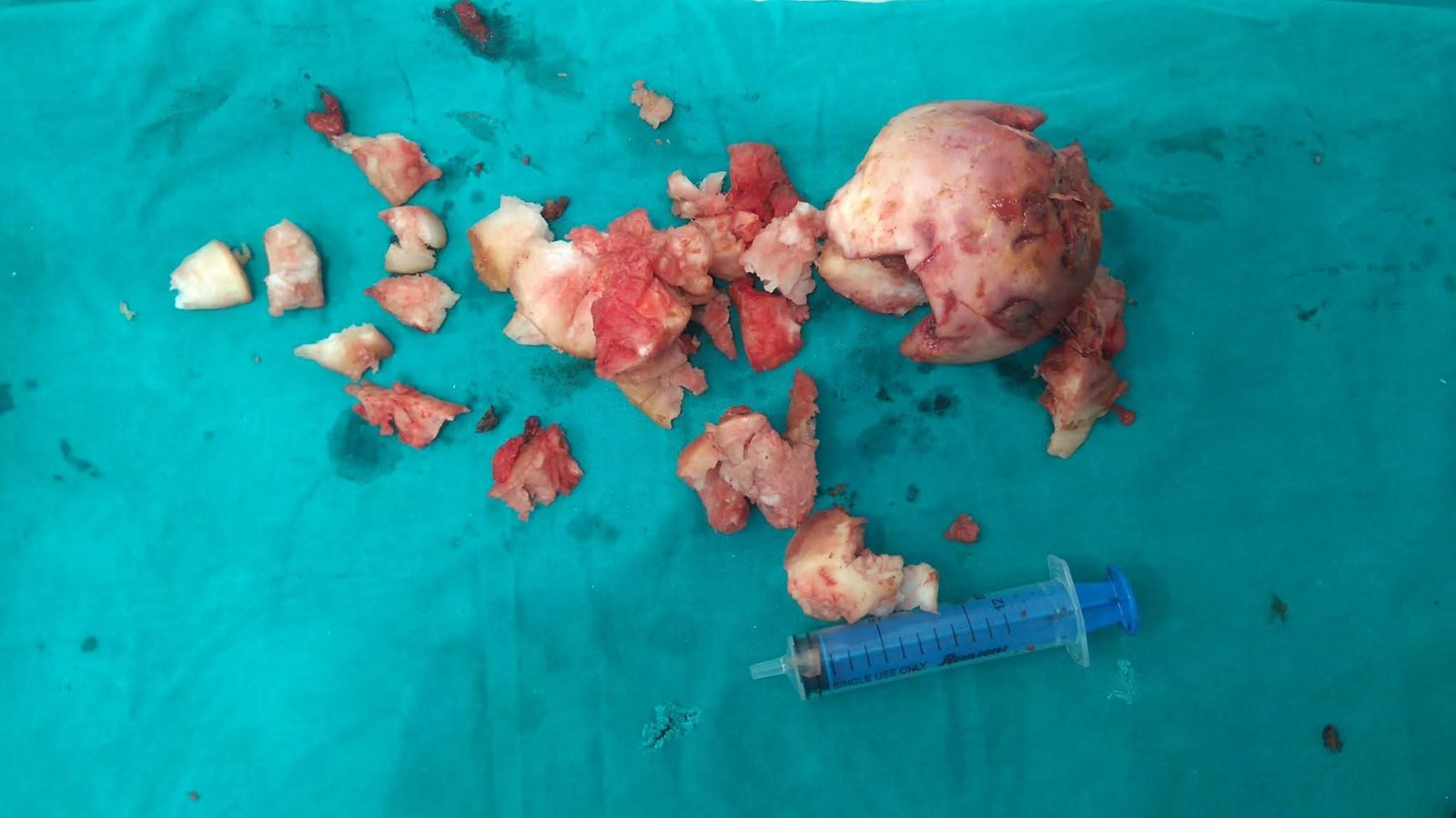
After complete extraction, thorough proctoscopic examination confirmed satisfactory rectal integrity without full-thickness injury. The patient recovered without complications; no abdominal surgery or colostomy was required.
Discussion
Management requires careful clinical judgment and a stepwise approach. The goals are safe extraction, preservation of anorectal function and avoidance of unnecessary abdominal surgery. Large retained objects can be difficult because of smooth surfaces, vacuum effect, limited working space, mucosal injury risk and possible perforation.
In both cases, individualized planning, direct proctoscopic visualization and selective use of specialized instruments allowed successful transanal extraction while avoiding major surgery.
Learning Points
- Every rectal foreign body requires individualized management.
- Early presentation improves the likelihood of successful transanal removal.
- Proctoscopy enhances safety during extraction.
- A myoma screw can facilitate removal of selected impacted objects.
- Piecemeal extraction may be effective when intact removal is not feasible.
- Post-extraction examination is essential to exclude injury or perforation.
- Laparotomy is reserved for failed transanal extraction, perforation or generalized peritonitis.
Case Series Summary
| Consultant Surgeon | Dr. Raman Kumar Garg |
|---|---|
| Department | Surgical Gastroenterology & Advanced GI Surgery |
| Hospital | Bombay Gastro & Cancer Institute, Bathinda |
| Cases | Two adult males with large retained rectal foreign bodies |
| Procedures | Examination under anesthesia, proctoscopy and specialized transanal extraction |
| Outcome | Successful removal in both cases, no laparotomy, no major complications |
Frequently Asked Questions
What is a rectal foreign body?
It is an object lodged inside the rectum that cannot be removed naturally. It is uncommon but can become a serious surgical emergency.
Is a rectal foreign body a medical emergency?
Yes. Delay can cause perforation, rectal tears, bleeding, obstruction, pelvic infection or sepsis.
What symptoms suggest a retained rectal foreign body?
Severe rectal or lower abdominal pain, difficulty sitting or walking, bleeding, inability to remove the object, constipation and abdominal distension may occur.
How is it diagnosed?
Evaluation may include medical history, examination, digital rectal examination when appropriate, X-ray or CT scan and proctoscopy.
Does every rectal foreign body require surgery?
No. Many can be removed through the anal canal using specialized instruments under anesthesia. Laparotomy is reserved for perforation, severe injury or failed transanal removal.
What is transanal removal?
It is extraction through the anus using specialized instruments under direct vision, avoiding major abdominal surgery whenever possible.
What instruments may be used?
Depending on the case, surgeons may use a proctoscope, myoma screw, selected forceps, grasping instruments, endoscopic tools or suction devices.
Why are some foreign bodies difficult to remove?
Large size, smooth surfaces, vacuum effect, rounded shape, fragile consistency and a high position inside the rectum can make extraction challenging.
Can a rectal foreign body cause perforation?
Yes. Delay or repeated attempts at home can cause rectal tears or perforation, leading to infection and possible emergency abdominal surgery.
Is anesthesia required?
Most large or impacted objects are removed under regional or general anesthesia, which relaxes the sphincter, reduces pain and improves safe extraction.
What happens after removal?
The rectum is examined with proctoscopy or endoscopy for tears, perforation, bleeding or remaining material, and the patient is observed before discharge.
When is laparotomy necessary?
It may be required if transanal removal fails, perforation or peritonitis develops, severe bleeding occurs or the object has migrated into the abdomen.
Can patients recover completely?
Yes. Most patients recover completely when the object is removed early and there is no perforation or significant rectal injury.
Is treatment confidential?
Absolutely. These cases are managed with medical confidentiality, professionalism and respect for privacy.
Who should treat a rectal foreign body?
Large or impacted objects should be managed by an experienced Surgical Gastroenterologist or GI Surgeon. Attempting removal at home can increase the risk of serious injury.
Why choose Dr. Raman Garg?
Dr. Raman Garg is an experienced Surgical Gastroenterologist and Advanced GI Surgeon who manages complex gastrointestinal emergencies and uses minimally invasive transanal techniques whenever feasible.
Patient identities and circumstances have been withheld to maintain confidentiality. This case series is shared for educational purposes only. Do not attempt self-removal; seek urgent medical care.


