
Massive small bowel gangrene is a rare but life-threatening surgical emergency. We present the case of a 60-year-old male with acute intestinal obstruction who was found to have extensive small bowel gangrene during emergency surgery. Prompt surgery, removal of non-viable bowel and preservation of healthy intestine allowed a satisfactory recovery.
Case Presentation
The patient presented to the Emergency Department at Bombay Gastro & Cancer Institute, Bathinda, with severe abdominal pain, repeated vomiting, progressive abdominal distension and absolute constipation. He appeared toxic and dehydrated, with marked distension and generalized tenderness.
After intravenous fluid resuscitation, electrolyte correction, nasogastric decompression and broad-spectrum antibiotics, he was shifted for emergency surgery.
Operative Findings
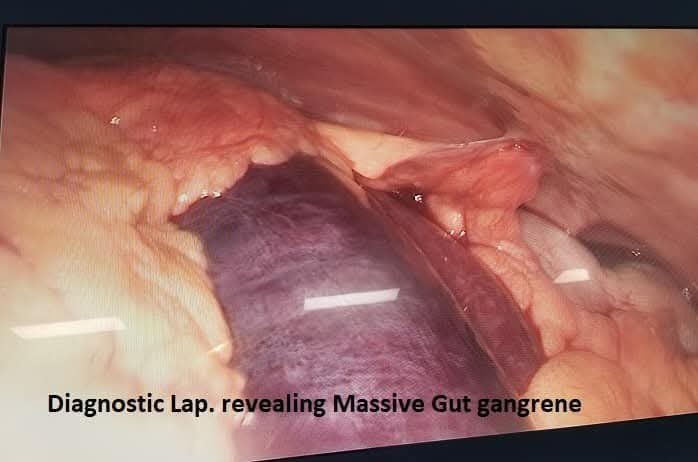
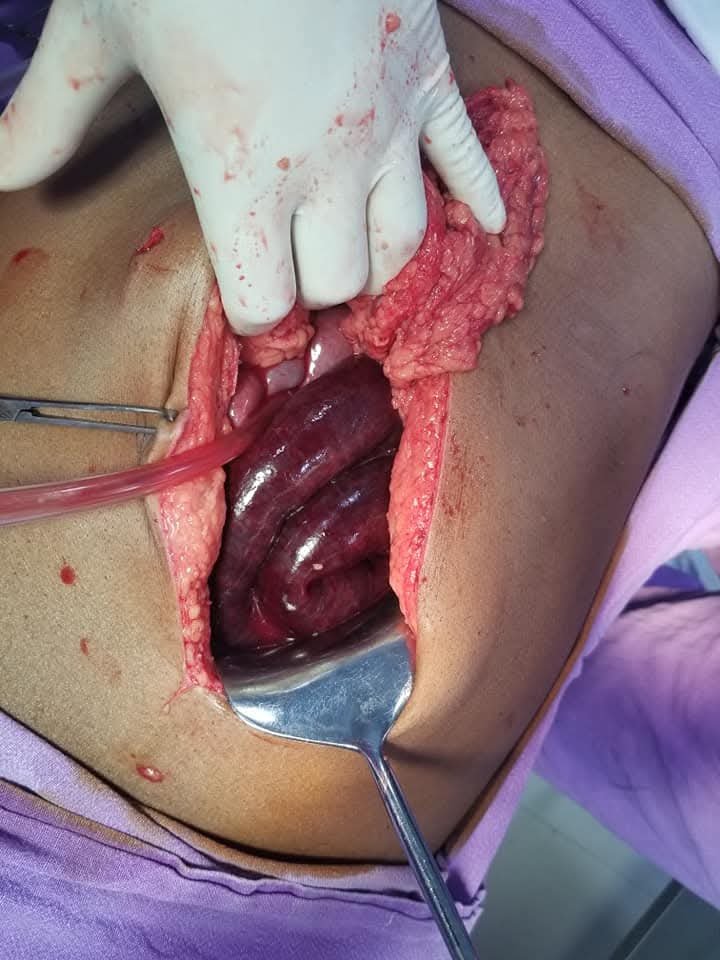
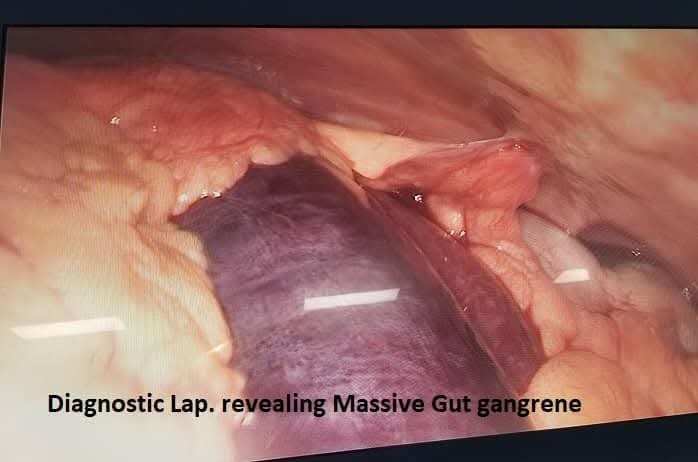
Emergency diagnostic laparoscopy demonstrated extensive gangrene involving a large segment of the small intestine, indicating irreversible bowel ischemia. Because of the severity of the disease, the procedure was converted to exploratory laparotomy.
Emergency Surgical Management
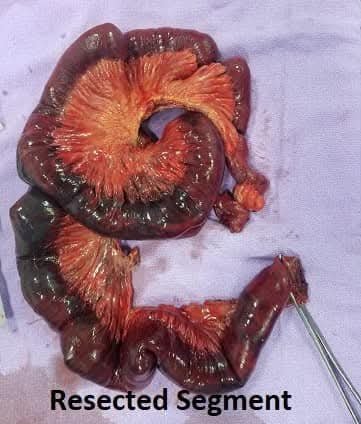
A long segment of necrotic small bowel was carefully resected while preserving all viable intestine. After vascular assessment and confirmation of healthy bowel margins, a tension-free primary jejunoileal anastomosis was performed to restore intestinal continuity.
The abdominal cavity was thoroughly irrigated with warm normal saline. Hemostasis was secured and the abdomen was closed in layers after confirming healthy bowel perfusion.
Postoperative Course
- Gradual return of bowel sounds
- Passage of flatus followed by stools
- Oral liquids started after bowel function returned
- Progression to a soft diet
- No anastomotic leak
- No postoperative wound infection
- Stable vital parameters throughout recovery
- Discharged on the ninth postoperative day
Why This Case Is Important
Massive small bowel gangrene is among the most catastrophic abdominal emergencies. Early symptoms can resemble uncomplicated intestinal obstruction, so maintaining a high index of suspicion is essential. Diagnostic laparoscopy provides rapid assessment, while conversion to open surgery allows safe resection and reconstruction when extensive necrosis is found.
Primary intestinal anastomosis may be appropriate in carefully selected patients with healthy bowel margins, adequate blood supply and hemodynamic stability. The goals are early diagnosis, rapid intervention, complete removal of dead bowel and preservation of maximum healthy intestine.
Learning Points
- Massive small bowel gangrene is a surgical emergency with high mortality.
- Delay can lead to perforation, septic shock and multi-organ failure.
- Diagnostic laparoscopy is valuable for rapid intraoperative assessment.
- Conversion to laparotomy is appropriate when extensive necrosis is identified.
- Primary jejunoileal anastomosis can be safely performed in selected patients.
- Early intervention significantly improves survival.
Case Summary
| Patient | 60-year-old Male |
|---|---|
| Diagnosis | Massive small bowel gangrene with acute intestinal obstruction |
| Consultant Surgeon | Dr. Raman Garg |
| Hospital | Bombay Gastro & Cancer Institute, Bathinda |
| Procedures | Emergency diagnostic laparoscopy, exploratory laparotomy, gangrenous bowel resection and primary jejunoileal anastomosis |
| Outcome | Uneventful recovery and discharge on postoperative Day 9 |
Frequently Asked Questions
What is small bowel gangrene?
It is a life-threatening condition in which blood supply to a portion of the small intestine is blocked, causing the bowel tissue to die. It requires immediate emergency treatment.
What causes small bowel gangrene?
Causes include strangulated hernia, volvulus, mesenteric ischemia, adhesions after surgery, internal hernia and severe intestinal obstruction.
What are the symptoms?
Sudden severe abdominal pain, persistent vomiting, abdominal swelling, inability to pass stool or gas, fever, rapid heart rate and signs of septic shock may occur.
Is small bowel gangrene a medical emergency?
Yes. Dead intestine can perforate and cause sepsis, multi-organ failure and death without urgent surgery.
How is it diagnosed?
Diagnosis may involve examination, blood tests, contrast CT and emergency diagnostic laparoscopy. Sometimes the exact diagnosis is confirmed only during surgery.
What is the treatment?
Once bowel is gangrenous, medicines cannot reverse the damage. Emergency surgery removes the dead intestine and restores continuity with a primary jejunoileal anastomosis when feasible.
What is a jejunoileal anastomosis?
It joins the healthy jejunum and ileum after the gangrenous segment is removed, restoring normal passage of food through the digestive tract.
Can someone survive removal of a large portion of small intestine?
Yes. Many patients recover well when enough healthy intestine remains. Early surgery and preservation of viable bowel improve nutrition and long-term quality of life.
Is laparoscopic surgery possible?
Diagnostic laparoscopy can assess bowel viability. If extensive gangrene is found, conversion to laparotomy is usually needed for safe resection and reconstruction.
How long does recovery take?
Recovery depends on disease severity, bowel length removed and overall health. Feeding is gradually resumed after bowel function returns, and discharge occurs once stable.
Can delayed treatment be fatal?
Yes. Delay increases the risk of perforation, septic shock, multi-organ failure and death. Immediate specialist evaluation is essential.
What is acute intestinal obstruction?
It occurs when the normal passage of intestinal contents is blocked. If untreated, it can compromise blood flow and cause gangrene and sepsis.
What warning signs require hospital admission?
Severe abdominal pain, persistent vomiting, increasing swelling, inability to pass stool or gas, high fever, fainting or low blood pressure require emergency evaluation.
Can small bowel gangrene be prevented?
Early treatment of hernias, obstruction and mesenteric ischemia can reduce risk. Sudden severe abdominal pain should never be ignored.
Who treats small bowel gangrene in Punjab?
An experienced Surgical Gastroenterologist with expertise in emergency GI surgery, bowel resection and intestinal reconstruction should manage this condition. Dr. Raman Garg manages complex emergency gastrointestinal cases in Bathinda.
Patient identity has been withheld to maintain confidentiality. This case is shared for educational purposes with informed consent and in accordance with patient privacy standards.


