
A 32-year-old mentally challenged male presented with severe abdominal pain, progressive abdominal distension and inability to pass stool or gas for two days. He had a long-standing history of chronic constipation. Examination showed a grossly distended, tender abdomen suggestive of acute intestinal obstruction.
Diagnosis
Emergency abdominal X-ray demonstrated the classic Coffee Bean Sign, indicating twisting of the sigmoid colon and a closed-loop large bowel obstruction. The sigmoid colon was markedly dilated to more than 9.5 cm, suggesting a high risk of ischemia and perforation.
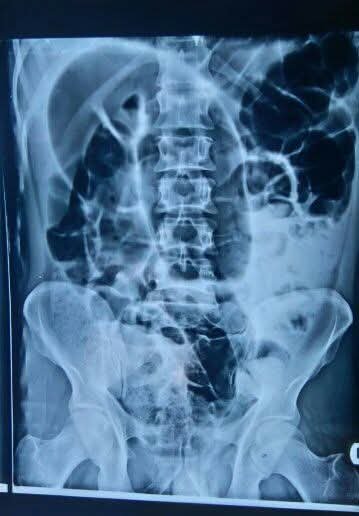
Why Sigmoid Volvulus Is Dangerous
Sigmoid volvulus occurs when the sigmoid colon twists around its mesentery, blocking stool and gas passage and potentially cutting off blood supply. Without urgent treatment it can progress to bowel gangrene, perforation, sepsis, shock and death.
Emergency Surgical Management
An emergency exploratory laparotomy was performed under general anesthesia. A large twisted, redundant sigmoid colon was identified, carefully untwisted and assessed. The affected redundant segment was resected, followed by primary colorectal anastomosis to restore bowel continuity in the same operation.
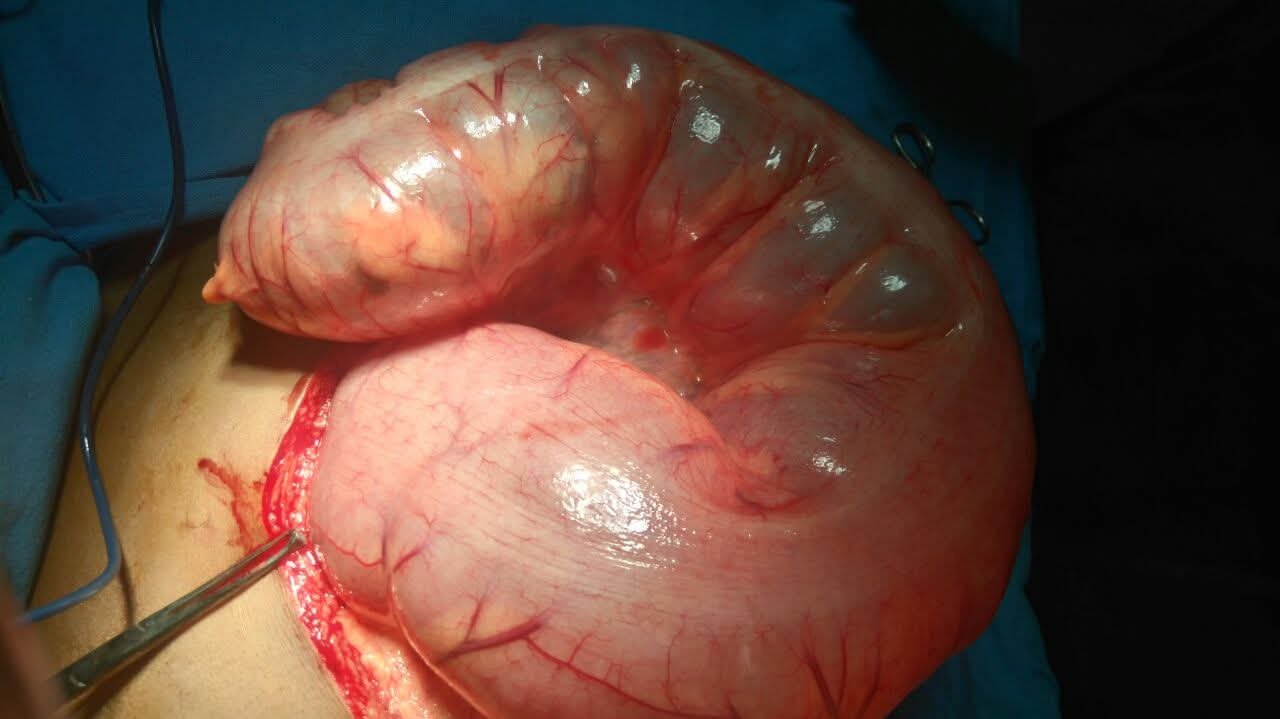
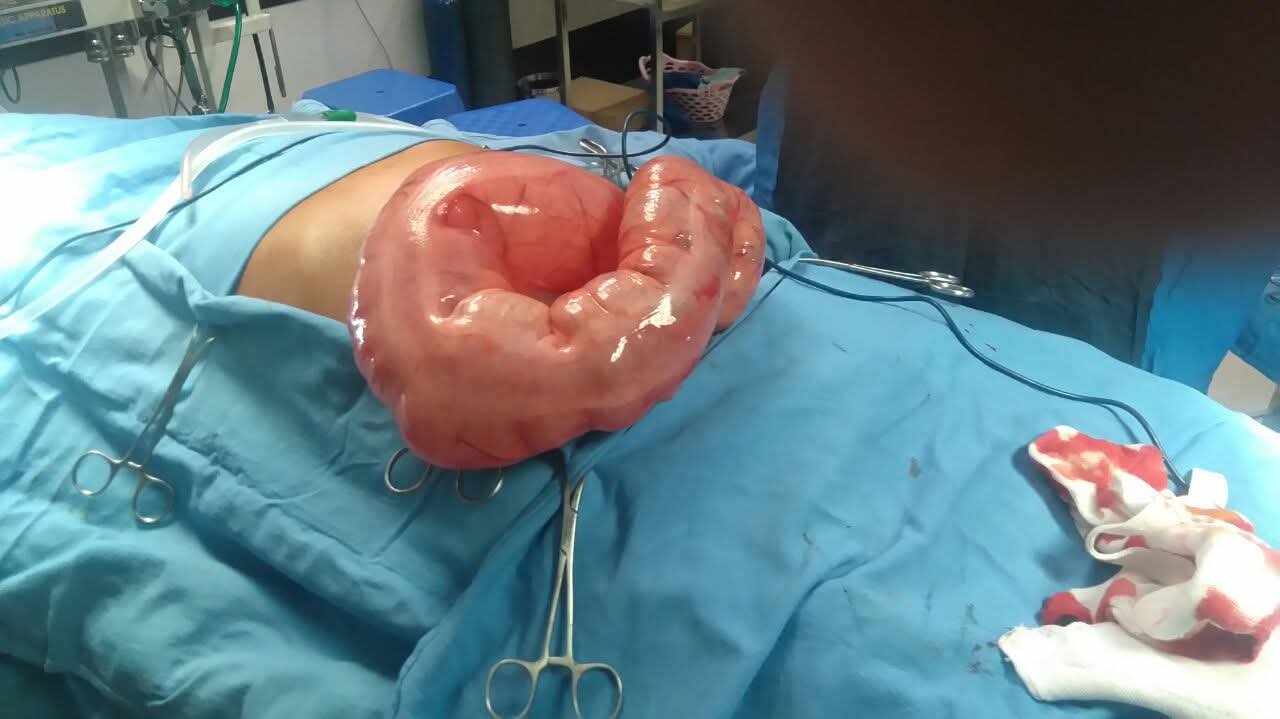
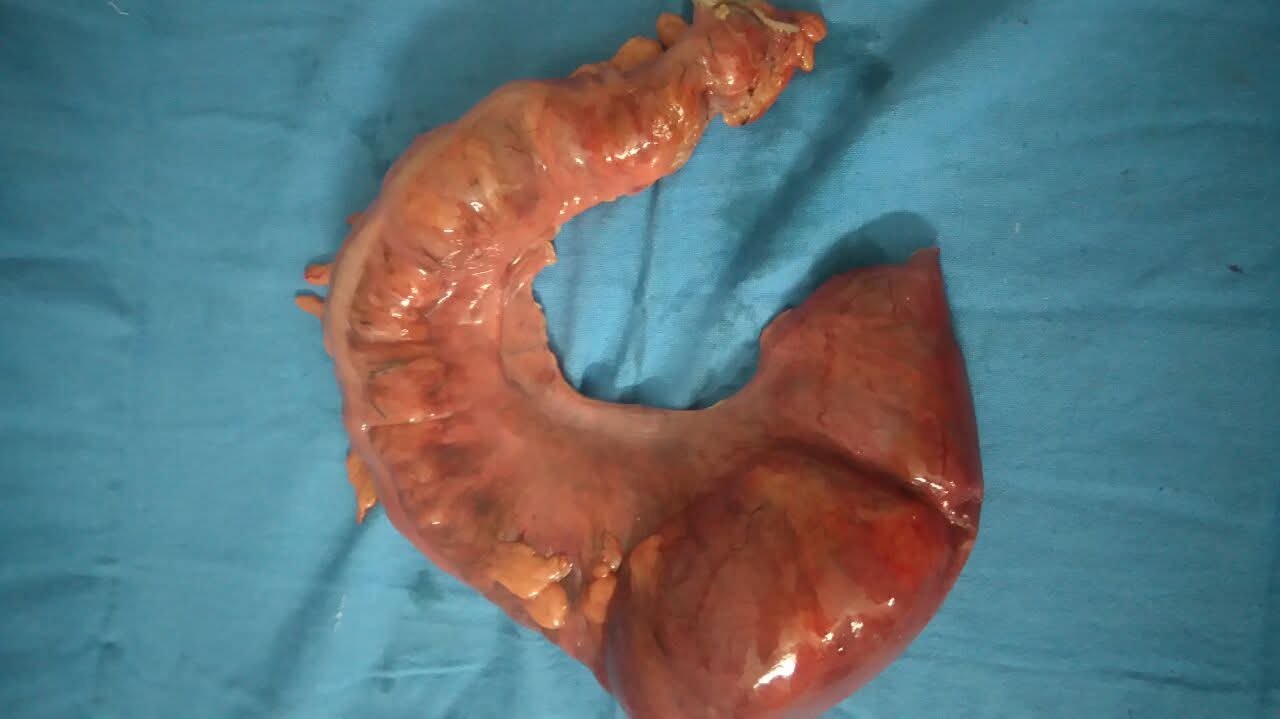
The operation was completed without a permanent stoma. Primary anastomosis was possible because the clinical and intraoperative conditions allowed restoration of bowel continuity safely.
Outcome
- Bowel function gradually returned
- Oral feeding was progressively resumed
- No major postoperative complications occurred
- No stoma was required
- Discharged on the fifth postoperative day
Why This Case Is Special
Prompt recognition of the Coffee Bean Sign and timely surgery prevented bowel gangrene and perforation. Despite significant dilation, the patient underwent single-stage sigmoid colectomy with primary colorectal anastomosis and recovered well.
Key Highlights
- Acute large bowel obstruction
- Classic Coffee Bean Sign on X-ray
- Redundant sigmoid volvulus with more than 9.5 cm dilation
- Emergency exploratory laparotomy
- Sigmoid colectomy with primary colorectal anastomosis
- No temporary or permanent stoma
- Discharge on postoperative Day 5
Case Summary
| Surgeon | Dr. Raman Kumar Garg |
|---|---|
| Department | Surgical Gastroenterology & Advanced GI Surgery |
| Hospital | Bombay Gastro & Cancer Institute, Bathinda |
| Patient | 32-year-old Male |
| Diagnosis | Sigmoid volvulus with acute large bowel obstruction |
| Procedure | Emergency laparotomy, sigmoid colectomy and primary colorectal anastomosis |
| Outcome | Uneventful recovery, no stoma and discharge on Day 5 |
Frequently Asked Questions
What is sigmoid volvulus?
It is a serious condition in which the sigmoid colon twists around its blood supply, causing acute large bowel obstruction and potentially cutting off bowel blood flow.
Is sigmoid volvulus a medical emergency?
Yes. Without prompt treatment, the twisted bowel can become gangrenous, perforate and cause sepsis, shock or death.
What causes sigmoid volvulus?
Risk factors include chronic constipation, a redundant sigmoid colon, neurological or psychiatric disorders, older age, institutionalization, high-fiber diets in susceptible people and previous volvulus.
What are the symptoms?
Sudden severe abdominal pain, progressive swelling, inability to pass stool or gas, vomiting, constipation and tenderness require immediate medical attention.
What is the Coffee Bean Sign?
It is the classic abdominal X-ray finding of sigmoid volvulus, created by the massively dilated twisted sigmoid colon resembling a coffee bean.
How is sigmoid volvulus diagnosed?
Diagnosis uses examination, abdominal X-ray, CT when needed and blood investigations. The Coffee Bean Sign often provides a rapid clue.
Can sigmoid volvulus be treated without surgery?
Stable patients without ischemia may initially undergo endoscopic decompression, but definitive sigmoid colectomy is usually recommended because recurrence is common. Ischemia, perforation or failed decompression requires emergency surgery.
What operation is performed?
Sigmoid colectomy removes the twisted segment. When safe, primary colorectal anastomosis reconnects the bowel during the same operation.
What is a primary colorectal anastomosis?
It joins the healthy ends of the large intestine after the diseased sigmoid colon is removed, allowing normal stool passage without a stoma in selected patients.
Will every patient need a colostomy bag?
No. If the bowel is healthy, there is no perforation and the patient is stable, primary anastomosis may avoid a temporary or permanent stoma.
What happens if sigmoid volvulus is untreated?
It can cause gangrene, perforation, fecal peritonitis, sepsis, septic shock, multi-organ failure and death.
How long is recovery after surgery?
Recovery depends on overall health and complications. Bowel function and oral feeding generally return gradually; this patient was discharged on Day 5.
Can sigmoid volvulus recur?
Yes. Detorsion alone has a high recurrence risk. Definitive sigmoid colectomy significantly reduces future episodes.
Who is at higher risk?
People with chronic constipation, neurological or psychiatric disorders, limited mobility, older age or an elongated sigmoid colon have higher risk.
When should I seek emergency care?
Seek immediate care for severe abdominal pain, rapid swelling, inability to pass stool or gas, persistent vomiting, fever with pain or signs of shock.
Why choose Dr. Raman Garg?
Dr. Raman Garg specializes in emergency gastrointestinal and colorectal surgery, intestinal obstruction and complex GI procedures, with a focus on preserving bowel continuity whenever safely possible.
Patient identity has been withheld to maintain confidentiality. This case is shared for educational purposes only. Individual diagnosis and treatment should always be based on evaluation by a qualified medical professional.


