
Dr. Raman Garg, Surgical Gastroenterologist and Advanced GI Surgeon at Bombay Gastro & Cancer Institute, Bathinda, managed a technically demanding giant uterine pelvic mass in a 30-year-old woman.
Case Presentation
The patient presented with progressive abdominal enlargement, lower abdominal heaviness, pelvic discomfort and a gradually increasing swelling that interfered with daily activities. Contrast-enhanced imaging demonstrated a giant pelvic mass measuring approximately 18 × 15 cm, most likely arising from the uterus. Because of its size and possible compression of nearby pelvic organs, definitive surgical management was planned.
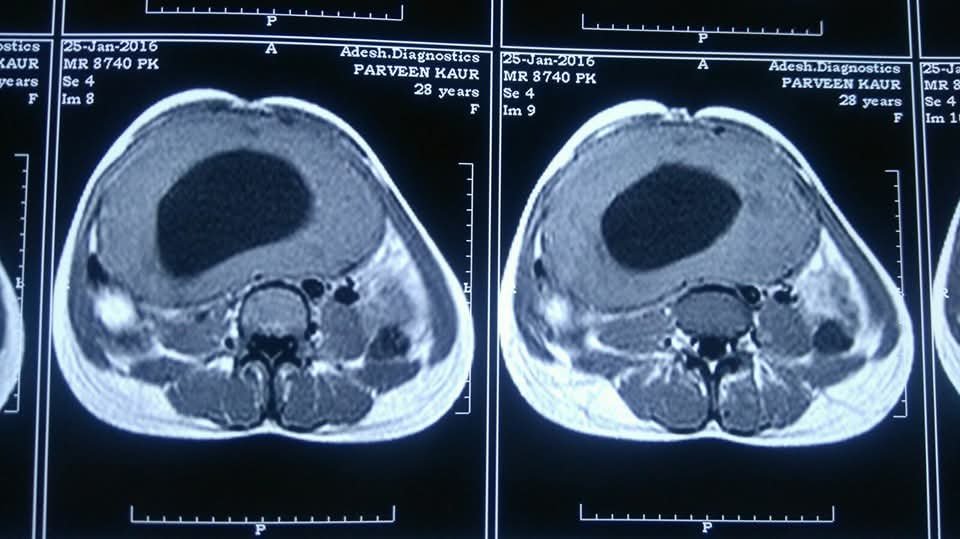
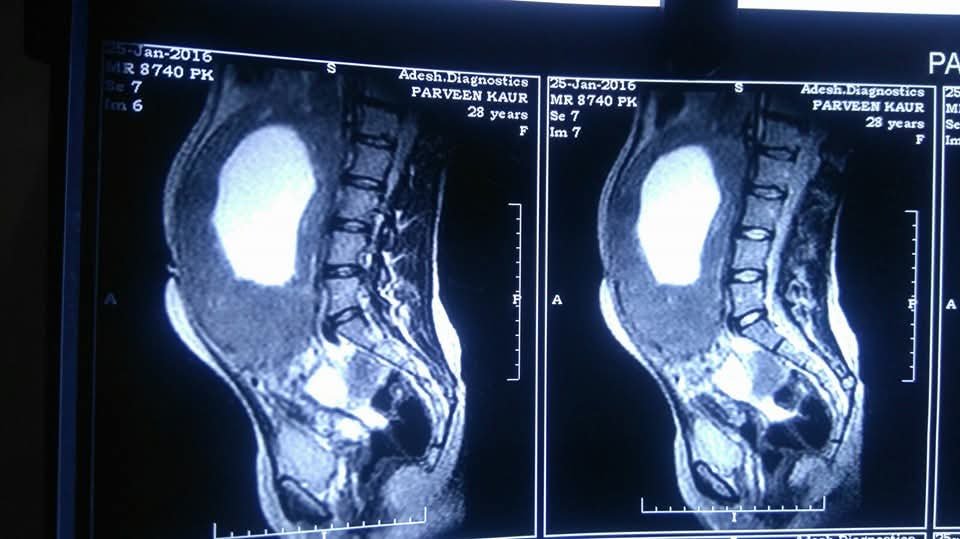
The Surgical Challenge
Giant pelvic masses can distort normal anatomy and compress the urinary bladder, ureters, bowel loops, iliac vessels and surrounding tissues. They may also increase the risk of bleeding, limit operative space and make injury to adjacent organs more likely. Careful preoperative evaluation, surgical planning and meticulous dissection are essential.
Surgical Management
After thorough evaluation and preoperative optimization, the patient underwent exploratory laparotomy under general anesthesia. A giant 18 × 15 cm pelvic mass arising from the uterus was identified. Careful adhesiolysis and dissection separated the mass from the bladder, bowel and major pelvic vessels.
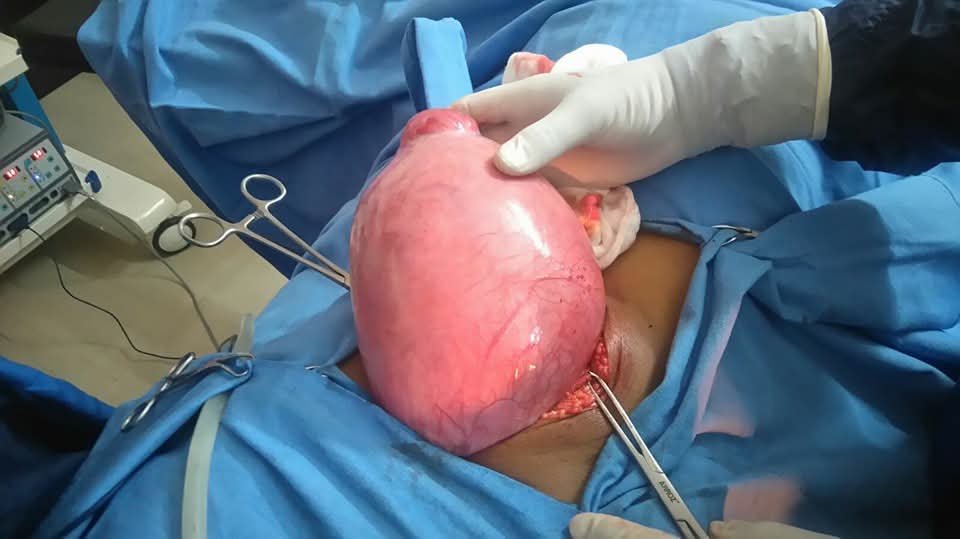
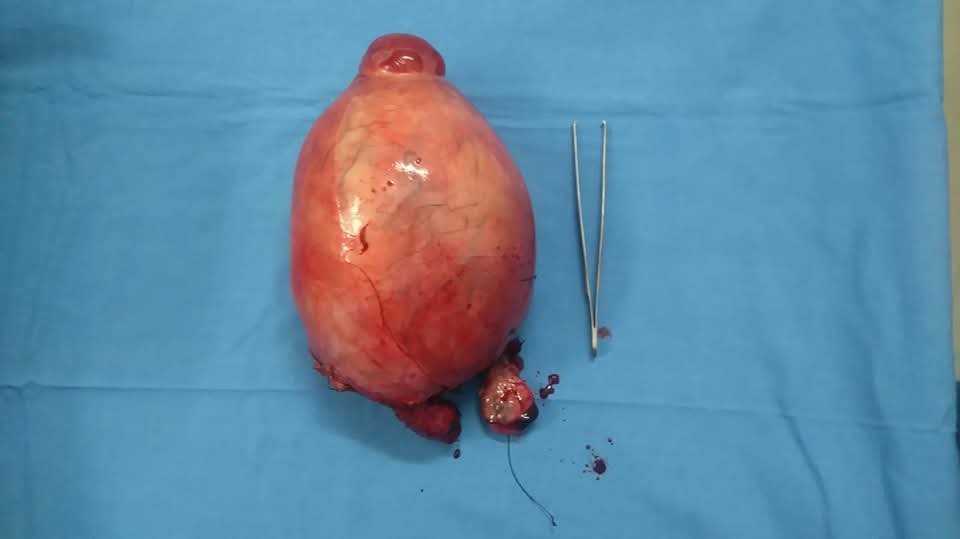
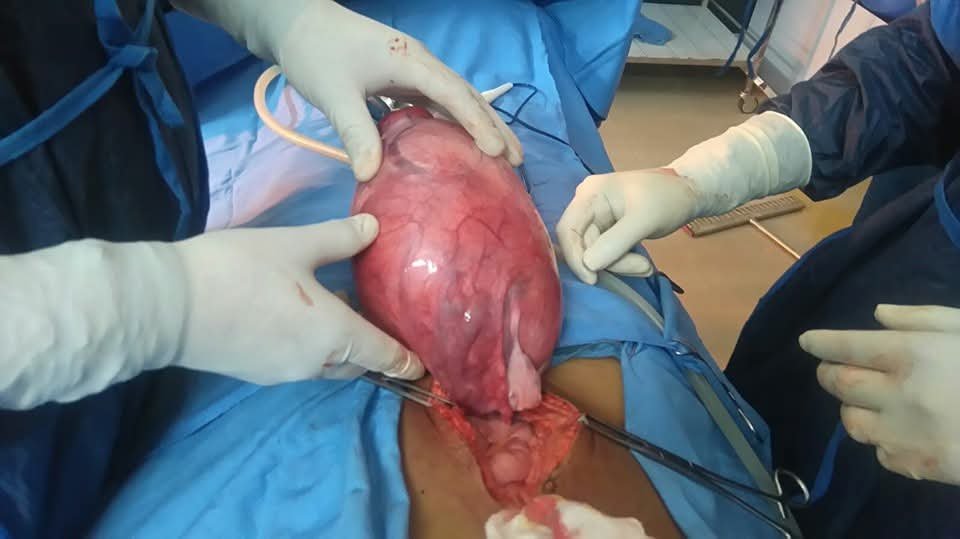
Following complete mobilization of the uterus, a radical hysterectomy with en-bloc excision of the mass was successfully performed. The specimen was removed intact and sent for detailed histopathological examination to establish the final diagnosis.
Postoperative Recovery
- Early ambulation
- Gradual resumption of oral diet
- Well-controlled pain
- No major postoperative complications
- Discharged on the fourth postoperative day with follow-up advice
Why This Case Is Special
Giant uterine pelvic masses of this size are uncommon and often require complex open surgery because of distorted pelvic anatomy and proximity to vital organs. Successful management depends on careful surgical judgment, meticulous technique, complete excision and protection of surrounding structures.
This case demonstrates the importance of timely referral to an experienced surgeon for complex pelvic conditions.
Key Highlights
- Giant 18 × 15 cm uterine pelvic mass
- Successful exploratory laparotomy
- Radical hysterectomy with complete en-bloc excision
- Careful preservation of surrounding pelvic structures
- Intact specimen removal without rupture
- Smooth postoperative recovery
- Discharged on the fourth postoperative day
- Specimen sent for histopathological examination
Case Summary
| Consultant Surgeon | Dr. Raman Garg |
|---|---|
| Hospital | Bombay Gastro & Cancer Institute, Bathinda |
| Patient | 30-year-old Woman |
| Mass | Giant 18 × 15 cm uterine pelvic mass |
| Procedure | Exploratory laparotomy and radical hysterectomy with en-bloc excision |
| Outcome | Uneventful recovery and discharge on Day 4 |
| Histopathology | Required for definitive diagnosis and further treatment planning |
Frequently Asked Questions
What is a giant pelvic mass?
It is an abnormally large growth arising from the uterus, ovaries or surrounding pelvic organs. It may be benign or malignant and often requires surgical assessment and removal.
What symptoms can a large pelvic mass cause?
Progressive abdominal swelling, pelvic pain or heaviness, frequent urination, constipation, heavy menstrual bleeding and difficulty eating because of pressure are possible symptoms.
What causes giant uterine masses?
Possible causes include large fibroids, adenomyosis, rare uterine tumors, uterine sarcoma and other pelvic tumors. Histopathology confirms the final diagnosis.
How is a pelvic mass diagnosed?
Evaluation may include examination, ultrasound, contrast CT or MRI, blood tests and tumor markers when indicated.
Why was surgery necessary?
The mass was very large, causing progressive symptoms, and its exact nature could only be confirmed after removal and histopathological examination.
What is a radical hysterectomy?
It is a major operation in which the uterus and surrounding supporting tissues are removed. The exact extent depends on the clinical situation.
Why are giant pelvic masses difficult to operate on?
They distort anatomy, compress the bladder, ureters, bowel and blood vessels, increase bleeding risk and require careful dissection to avoid injury.
Is surgery for a giant pelvic mass safe?
With careful planning and an experienced surgical team, these complex operations can be performed safely with good outcomes.
What happens after the mass is removed?
The specimen is sent for histopathology to determine whether it is benign or malignant, identify its exact type and assess whether additional treatment is needed.
How long is hospital stay after radical hysterectomy?
Many patients remain hospitalized for about 3–5 days, depending on recovery, pain control and bowel function. This patient was discharged on Day 4.
How long does complete recovery take?
Recovery commonly progresses over 4–8 weeks. Heavy lifting and strenuous activity should be avoided as advised by the surgeon.
Can a giant pelvic mass be cancer?
Many uterine masses are benign, but imaging cannot always distinguish benign from malignant tumors. Histopathology provides the definitive diagnosis.
Can large pelvic masses be removed laparoscopically?
It depends on size, location and suspected diagnosis. Extremely large masses often require open surgery for safe removal.
What warning signs need medical attention?
Rapid abdominal enlargement, persistent pelvic pain, heavy bleeding, difficulty passing urine, severe constipation or sudden worsening pain should be evaluated promptly.
Why choose Dr. Raman Garg for complex pelvic surgery?
Dr. Raman Garg specializes in advanced gastrointestinal and complex abdominal surgery, including large abdominal and pelvic masses, with careful planning and meticulous dissection.
Patient identity has been withheld to maintain confidentiality. This case is shared solely for educational purposes. The definitive diagnosis and need for additional treatment depend upon final histopathology.


