
A 45-year-old gentleman presented to Dr. Raman Garg with severe abdominal pain, abdominal tenderness and signs of an acute surgical abdomen. Ultrasound suggested acute appendicitis with possible appendicular perforation, and emergency laparoscopic surgery was planned.
An Unexpected Finding During Surgery
Diagnostic laparoscopy showed a completely normal appendix. Systematic exploration instead revealed generalized fecal contamination and a perforation in the ileum, confirming perforation peritonitis with generalized fecal peritonitis.
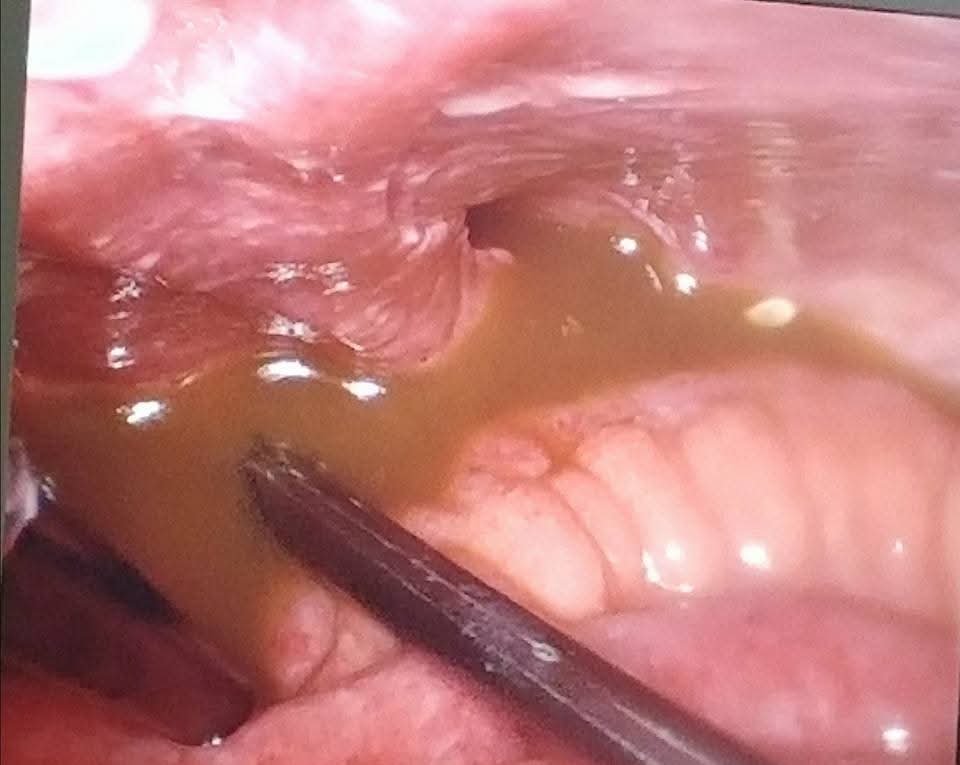
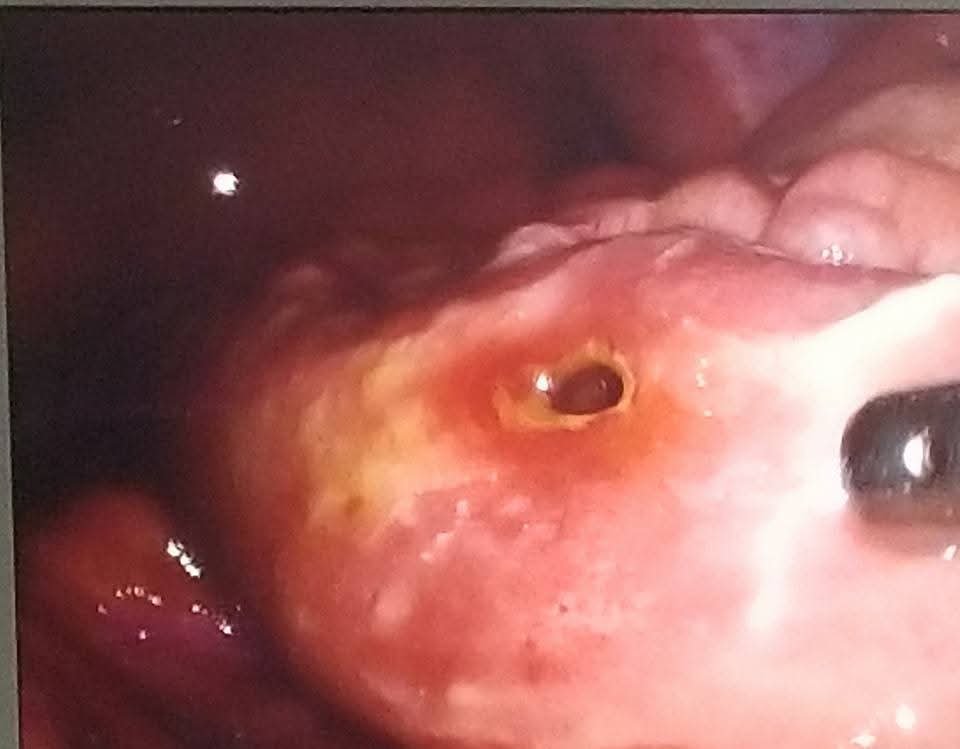
Laparoscopic Surgical Management
The entire procedure was completed using a minimally invasive laparoscopic approach. Dr. Raman Garg performed diagnostic laparoscopy, thorough peritoneal lavage, identification of the perforation, exteriorization of the affected bowel segment and a laparoscopic loop ileostomy fashioned through the perforation site. This diverted intestinal contents, controlled contamination and allowed sepsis to resolve without a large open abdominal incision.
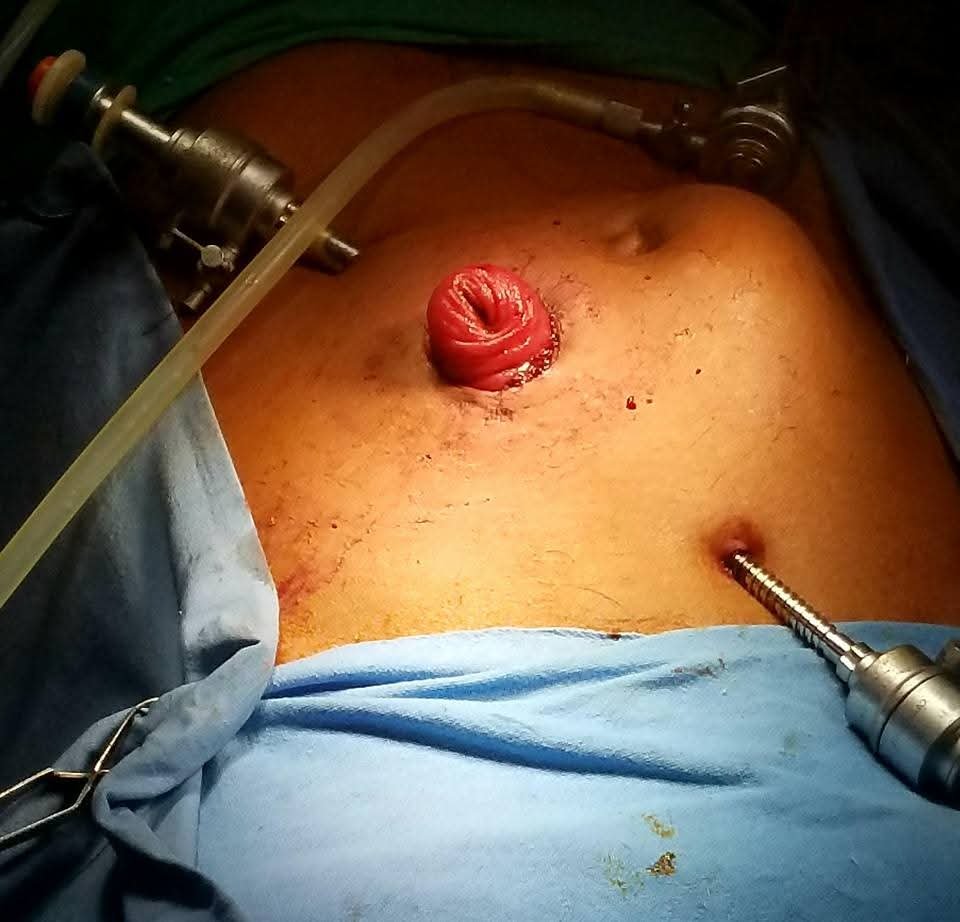
Postoperative Recovery
- Sepsis gradually resolved
- Bowel function recovered satisfactorily
- Oral feeding resumed as tolerated
- No major postoperative complications occurred
- Discharged in satisfactory condition on the fifth postoperative day with a functioning ileostomy
Why This Case Is Important
Acute appendicitis is a common cause of right lower abdominal pain, but several life-threatening conditions can mimic it. Here, imaging suggested appendicular perforation, while the actual pathology was an ileal perforation with generalized fecal peritonitis and a normal appendix.
Diagnostic laparoscopy established the correct diagnosis and enabled definitive treatment during the same procedure. Prompt intervention controlled infection, avoided unnecessary appendicectomy, minimized surgical trauma and supported an excellent recovery.
Case Summary
| Consultant Surgeon | Dr. Raman Garg |
|---|---|
| Hospital | Bombay Gastro & Cancer Institute, Bathinda |
| Patient | 45-year-old Male |
| Final diagnosis | Ileal perforation with generalized fecal peritonitis, initially suspected as acute appendicitis |
| Procedure | Diagnostic laparoscopy, peritoneal lavage and laparoscopic loop ileostomy |
| Outcome | Uneventful recovery and discharge on the fifth postoperative day |
Frequently Asked Questions
Can an ileal perforation be mistaken for acute appendicitis?
Yes. Ileal perforation can cause severe right lower abdominal pain, fever, nausea and tenderness similar to appendicitis. Diagnostic laparoscopy can establish the correct diagnosis and allow immediate treatment.
What is an ileal perforation?
It is a hole in the last part of the small intestine that allows intestinal contents to leak into the abdomen, causing peritonitis and sepsis.
What are the symptoms of ileal perforation?
Symptoms may include severe abdominal pain, fever, vomiting, swelling, constipation or inability to pass stool, generalized tenderness and signs of sepsis.
Can ultrasound diagnose ileal perforation?
Not always. Ultrasound may suggest appendicitis or detect free fluid. CT is generally more reliable, although the diagnosis may sometimes be confirmed only during laparoscopy.
Why is diagnostic laparoscopy important in emergency abdominal pain?
It allows direct inspection of the abdomen, identifies unexpected conditions such as ileal perforation and enables minimally invasive treatment without delay.
Can ileal perforation be treated laparoscopically?
Yes, in selected patients. Treatment may include peritoneal lavage, bowel repair or laparoscopic ileostomy depending on bowel condition and contamination.
What is a loop ileostomy?
A loop ileostomy is a temporary opening from the small intestine onto the abdominal wall that diverts stool while the diseased bowel heals.
Is a loop ileostomy permanent?
It is often temporary. Once infection has resolved and the intestine has healed, it may be reversed with planned surgery when clinically appropriate.
What happens if intestinal perforation is not treated?
Delayed treatment can lead to severe sepsis, septic shock, multiple organ failure and death. Early emergency surgery improves the chances of recovery.
When should I see a surgical gastroenterologist for severe abdominal pain?
Seek immediate care if pain is severe or persistent, or is associated with fever, vomiting, swelling, inability to pass stool or gas, or signs of shock.
Patient identity has been withheld to maintain confidentiality. This case is shared for educational purposes only. Individual diagnosis and treatment should always be based on evaluation by a qualified medical professional.


