Pilonidal Sinus (Tailbone Cyst) — Permanent Surgical Cure in Bathinda
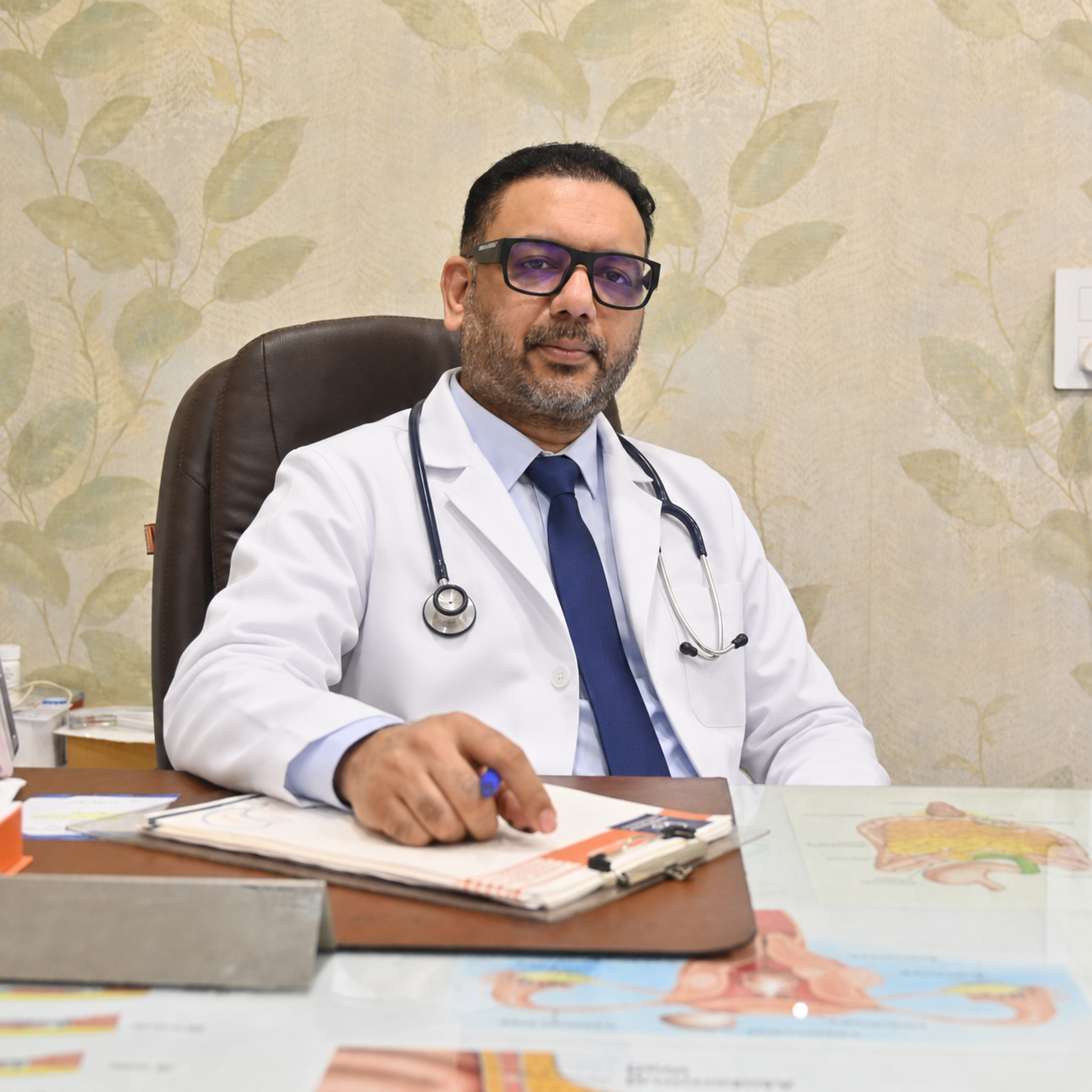
A pilonidal sinus is a small tunnel or pit in the skin at the top of the buttocks crease (natal cleft), just below the tailbone (coccyx). It can contain hair, skin debris, and bacteria — and often becomes infected, causing an abscess (collection of pus). Pilonidal disease primarily affects young men and can be extremely painful, recurring, and disruptive to daily life. Dr. Raman Garg at Bombay Gastro & Cancer Institute, Bathinda provides expert surgical management of pilonidal sinus with very low recurrence rates using modern flap reconstruction techniques.
What Causes Pilonidal Sinus?
The exact cause is debated, but it is believed that:
- Hair in the gluteal cleft becomes embedded in the skin, creating a foreign body reaction
- Skin friction and pressure (from sitting) pushes hair into the skin
- A small skin pit forms — which then collects hair and debris
- When infected, this forms a pilonidal abscess
- Recurrent infections create a pilonidal sinus with multiple openings
Risk Factors
- Young adult males (peak age 15–35) — testosterone affects hair growth
- Excessive body or gluteal hair
- Deep natal cleft (gluteal fold)
- Prolonged sitting — drivers, students, office workers
- Obesity — increased sweating and skin friction
- Family history
- Previous pilonidal abscess (drained but not excised)
Symptoms of Pilonidal Sinus
- Pain at the top of the buttocks — worse with sitting
- Swelling and redness near the tailbone area
- Discharge of pus or blood from a small opening
- Hair protruding from the opening
- Acute abscess: sudden severe pain, swelling, fever, fluctuant (fluid-filled) lump
- Multiple openings (sinuses) — in chronic/recurrent disease
Treatment of Pilonidal Sinus
Phase 1: Acute Abscess Drainage
If a pilonidal abscess is present, the first step is emergency incision and drainage (I&D) under local anaesthesia to drain the pus and relieve pain. However, I&D alone is not a cure — the sinus tract must be excised later to prevent recurrence.
Phase 2: Definitive Surgical Excision
After the acute infection settles (usually 4–6 weeks after drainage), Dr. Raman Garg performs definitive excision of the entire sinus complex using one of these techniques:
A. Karydakis Flap
- The sinus is excised along with a margin of normal tissue
- An off-midline closure — wound is moved away from the natal cleft
- Creates a flat, tension-free closure
- Recurrence rate: <3%
- Dr. Raman Garg's preferred technique for most cases
B. Limberg (Rhomboid) Flap
- A rhomboid-shaped excision of the sinus
- Rotational flap fills the defect — tension-free closure away from midline
- Recurrence rate: <5%
- Good for large or complex pilonidal disease
C. Pit Picking (Minimal Excision)
- For simple, uncomplicated pilonidal disease with only a few pits
- Tiny incisions over each pit; hair and debris removed
- Minimal wound, quick recovery (2–3 days)
- Best results when combined with depilation of the area
Why Off-Midline Closure Techniques Matter
The key to preventing pilonidal sinus recurrence is moving the wound away from the midline natal cleft. The natal cleft creates moisture and friction — a midline scar in this area tends to break down and allow recurrence. Off-midline flap techniques (Karydakis, Limberg) eliminate this problem by:
- Placing the wound on the lateral (side) buttock where it heals well
- Flattening the natal cleft — removing the deep crease where hair accumulates
- Achieving primary healing without tension
Recovery After Pilonidal Sinus Surgery
- Most patients are discharged the same day or next day
- Sitting may be uncomfortable for 1–2 weeks — a donut cushion helps
- Wound care and dressings for 2–3 weeks
- Most patients can return to desk work in 1–2 weeks
- Complete healing: 3–6 weeks (flap techniques) to 6–10 weeks (open excision)
- Regular hair removal (laser or shaving) from the area reduces recurrence
Frequently Asked Questions — Pilonidal Sinus Bathinda
Tailbone ke paas dard aur pus — kya yeh pilonidal sinus hai?
Haan — tailbone ke paas dard, sujan, aur pus/blood discharge pilonidal sinus ke signs hain. Dr. Raman Garg Bombay Gastro & Cancer Institute, Bathinda mein examination karke confirm karenge aur treatment plan banayenge. Call +91 82641-60001.
Pilonidal sinus ki surgery Bathinda mein hoti hai?
Haan. Dr. Raman Garg Karydakis aur Limberg flap techniques use karte hain — jo sabse kam recurrence deti hain. Same-day ya next day discharge. Spinal anaesthesia — surgery ke waqt bilkul dard nahi. Call +91 82641-60001.
Pilonidal sinus baar baar aa jaata hai — permanent cure kya hai?
Simple drain karne se sirf temporary relief milta hai — sinus waapas aata hai. Permanent cure ke liye off-midline flap surgery (Karydakis/Limberg) zaruri hai. Iske baad laser hair removal bhi karana chahiye area se. Dr. Raman Garg se permanent treatment ke liye milein.