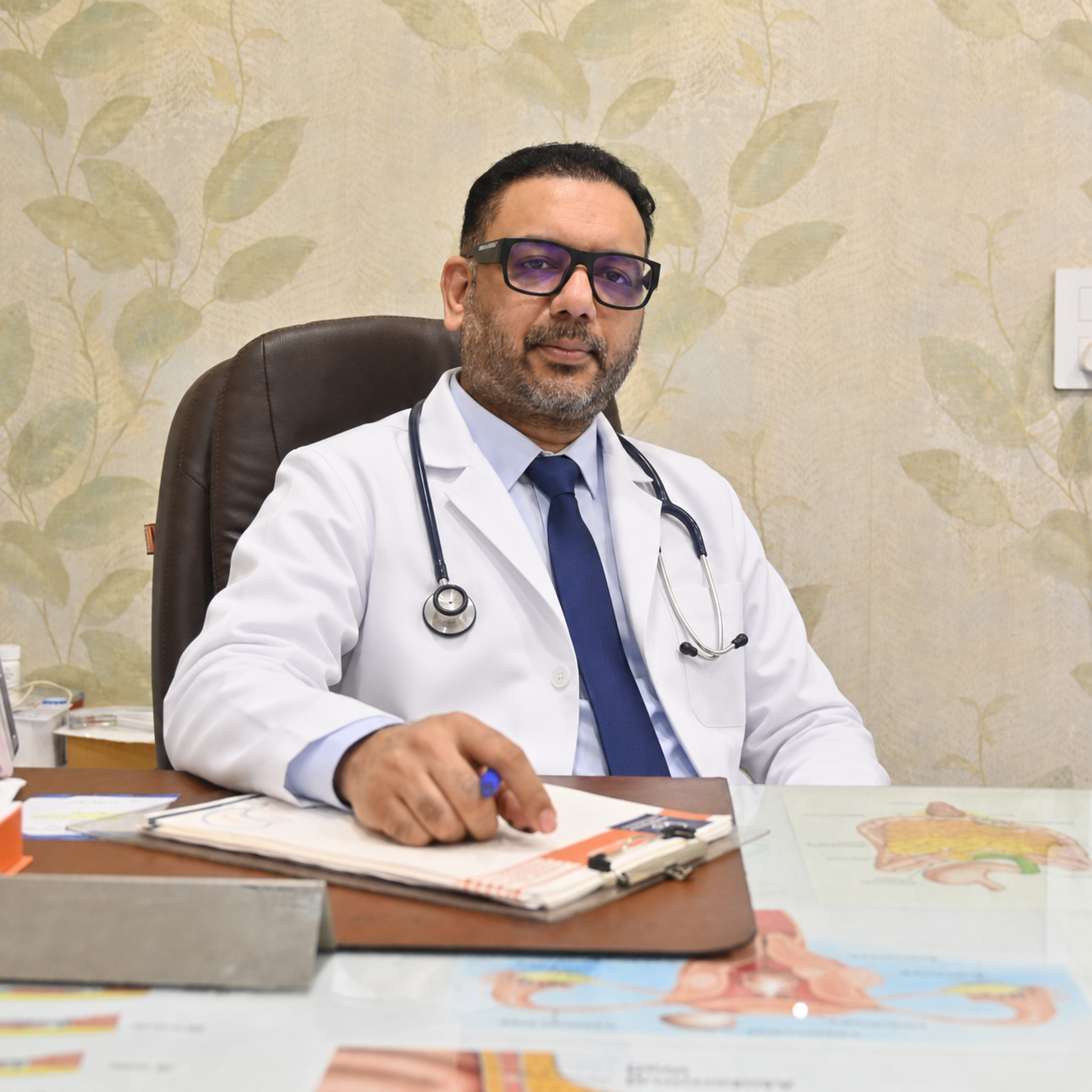
Living with IBD — You're Not Alone
Inflammatory Bowel Disease (IBD) is a chronic inflammatory condition of the gastrointestinal tract. The two main types — Crohn's disease and ulcerative colitis — cause debilitating symptoms that significantly impact quality of life. Dr. Raman Garg at Bombay Gastro & Cancer Institute, Bathinda provides comprehensive, evidence-based IBD management — from accurate diagnosis to cutting-edge biologic therapy and minimally invasive surgery when needed.
IBD: Crohn's vs Ulcerative Colitis
Symptoms of IBD
Intestinal Symptoms
- Chronic diarrhoea (sometimes bloody)
- Abdominal cramping and pain
- Urgency to pass stools
- Feeling of incomplete evacuation
- Nausea and vomiting
- Fistulas and abscesses (Crohn's)
Extra-Intestinal Symptoms
- Unexplained weight loss
- Fatigue and anaemia
- Joint pain (arthritis)
- Skin rashes (erythema nodosum)
- Eye inflammation (uveitis)
- Mouth ulcers (aphthous ulcers)
Diagnosis of IBD
- Colonoscopy with biopsy — gold standard; visualizes entire colon and terminal ileum
- Upper GI endoscopy — for Crohn's affecting oesophagus, stomach, duodenum
- Capsule endoscopy — for small bowel Crohn's not reachable by standard scopes
- CT/MR enterography — imaging of small bowel involvement, fistulas, abscesses
- Faecal calprotectin — non-invasive stool marker of bowel inflammation
- Blood tests — CRP, ESR, CBC, iron studies, B12, folate, albumin
- ANCA/ASCA antibodies — helps differentiate UC from Crohn's
Medical Treatment Options
- Aminosalicylates (5-ASA / mesalamine) — first-line for mild-moderate UC
- Corticosteroids — for acute flares (short-term use only due to side effects)
- Immunomodulators — azathioprine, 6-mercaptopurine, methotrexate for maintenance
- Biologics (anti-TNF agents) — infliximab, adalimumab — for moderate-severe IBD, fistulizing Crohn's
- JAK inhibitors — tofacitinib — newer targeted oral therapy for UC
- Nutritional support — enteral nutrition plays a key role in Crohn's disease management
Surgical Treatment
Dr. Raman Garg performs minimally invasive IBD surgery including:
- Laparoscopic colectomy — for refractory UC or dysplasia/cancer complicating UC
- Ileostomy / colostomy — bowel diversion to allow healing
- Strictureplasty — widening narrowed bowel segments in Crohn's without resection
- Bowel resection — removal of diseased bowel segments in Crohn's
- Fistula repair — surgical management of complex perianal/enteric fistulas
- Abscess drainage — surgical or radiological drainage of intra-abdominal abscesses