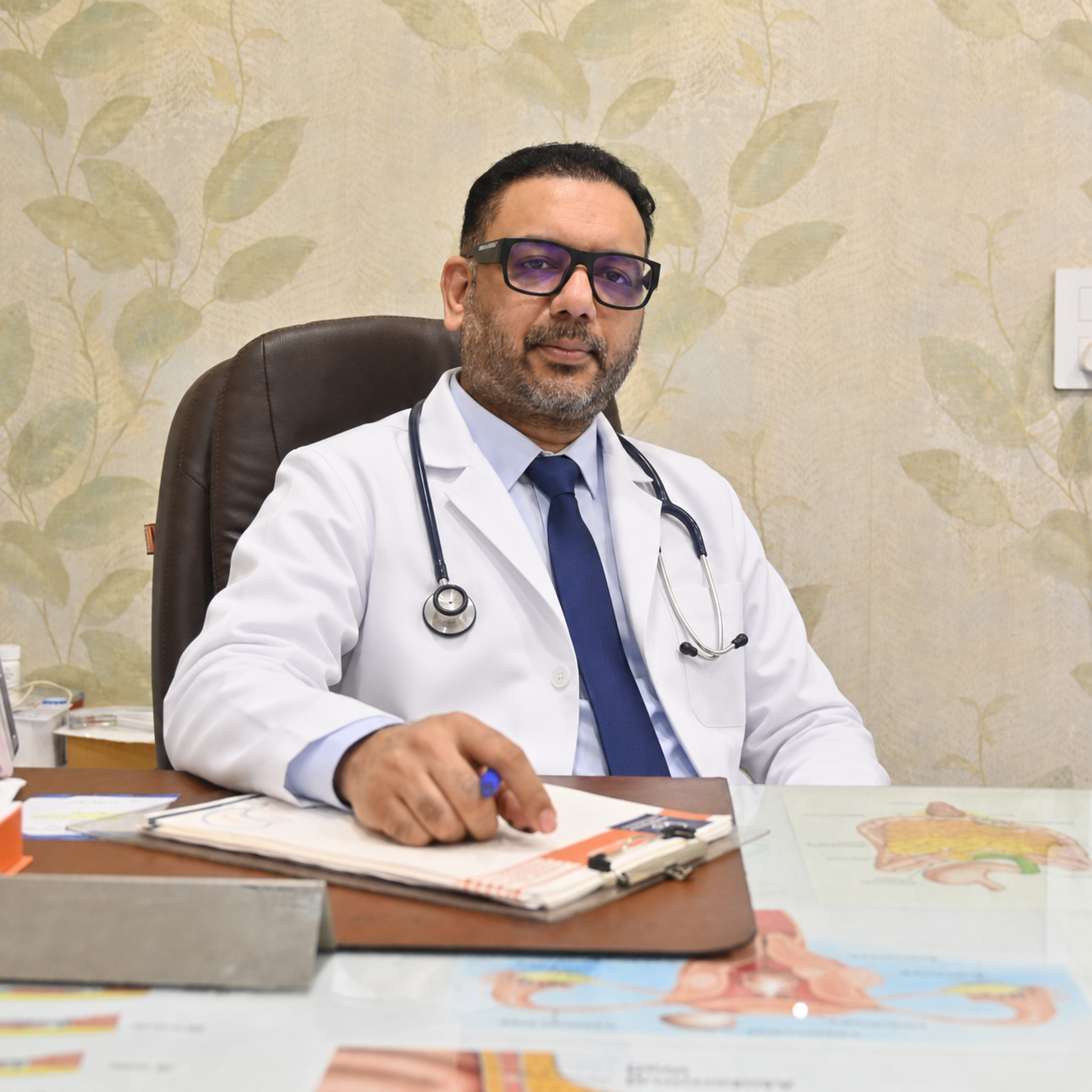
Colorectal Cancer Care in Bathinda
Colorectal (colon and rectal) cancer is among the most common cancers worldwide and the leading cause of cancer-related deaths in India. However, when detected early, it is one of the most treatable cancers. Dr. Raman Garg, Senior Surgical Gastroenterologist at Bombay Gastro & Cancer Institute, Bathinda, brings world-class expertise in colorectal cancer — from early diagnosis through colonoscopy to advanced laparoscopic surgical resection.
Risk Factors for Colon Cancer
Non-Modifiable Risks
- Age >45 years
- Family history of colorectal cancer
- Inherited syndromes (FAP, Lynch syndrome)
- Personal history of polyps or IBD
- Prior radiation to abdomen/pelvis
Modifiable Risks
- High red/processed meat diet
- Low fibre, low vegetable diet
- Obesity & physical inactivity
- Smoking & heavy alcohol use
- Type 2 diabetes
Symptoms of Colon Cancer
- Change in bowel habits — persistent diarrhoea, constipation, or narrowing of stools
- Rectal bleeding or blood in stool (bright red or dark maroon)
- Persistent abdominal cramping, pain, or discomfort
- Feeling of incomplete bowel emptying
- Unexplained weight loss
- Fatigue and weakness (from anaemia due to occult bleeding)
- Palpable abdominal mass in advanced cases
Diagnosis & Staging
- Colonoscopy with biopsy — gold standard; visualizes the entire colon, removes polyps, takes tissue samples
- CT colonography — virtual colonoscopy for high-risk or incomplete colonoscopy cases
- CEA tumour marker — carcinoembryonic antigen blood test
- CT scan chest/abdomen/pelvis — staging to check for lymph node or liver metastasis
- MRI pelvis — for rectal cancer, to assess local invasion
- PET scan — for suspected distant metastasis
Colon Cancer Stages & Survival
Treatment: Laparoscopic Colectomy
Surgery is the primary treatment for colon cancer. Dr. Raman Garg specializes in laparoscopic colectomy — removal of the cancerous segment of colon using minimally invasive techniques. Benefits include:
- Smaller incisions (5 tiny cuts vs one large cut)
- Less blood loss and lower transfusion requirement
- Faster return of bowel function
- Shorter hospital stay (3–5 days vs 7–10 days)
- Less post-operative pain and fewer wound complications
- Equivalent or superior oncological outcomes to open surgery
For Stage III cancer, surgery is followed by adjuvant chemotherapy (typically FOLFOX or CAPOX regimen for 6 months). Dr. Garg coordinates with medical oncologists for comprehensive multimodal care.
Colon Cancer Screening — Save Your Life
Screening Recommendations:
- Average risk: Colonoscopy from age 45, repeat every 10 years
- Family history: Start at age 40 or 10 years before earliest affected relative
- FAP/Lynch syndrome: Annual colonoscopy from teenage years
- Prior polyps: Follow-up colonoscopy in 3–5 years based on polyp type