
Acute intestinal obstruction is a surgical emergency, particularly when the blood supply to the intestine becomes compromised. Dr. Raman Garg, Surgical Gastroenterologist and Advanced Laparoscopic Surgeon, successfully managed a rare case in which a critically ischemic segment of small intestine was salvaged without bowel resection.
Patient Presentation
A 65-year-old female presented with severe abdominal pain, progressive abdominal distension, recurrent vomiting and absolute constipation, with failure to pass stools and flatus. Clinical examination and radiological findings suggested acute small bowel obstruction. After prompt resuscitation and stabilization, she was taken for emergency diagnostic laparoscopy.
Intraoperative Findings
Laparoscopic exploration revealed a tight fibrous adhesive band causing a closed-loop obstruction of the jejunum. The trapped bowel was markedly congested, dusky purple, grossly edematous and severely ischemic with impending gangrene.
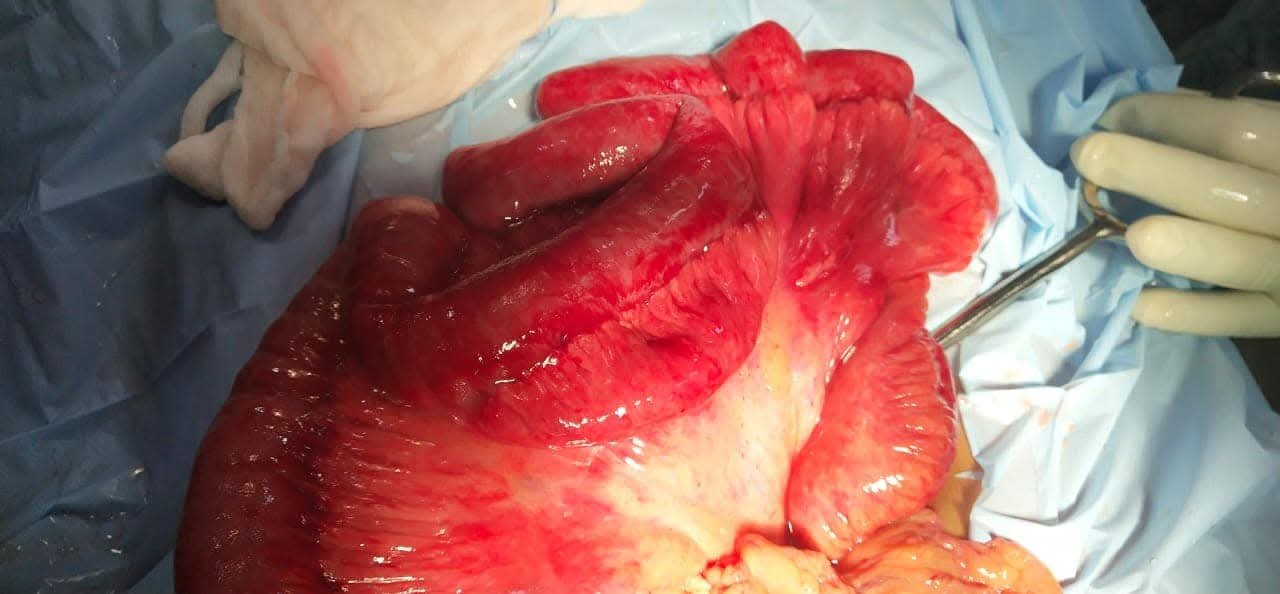
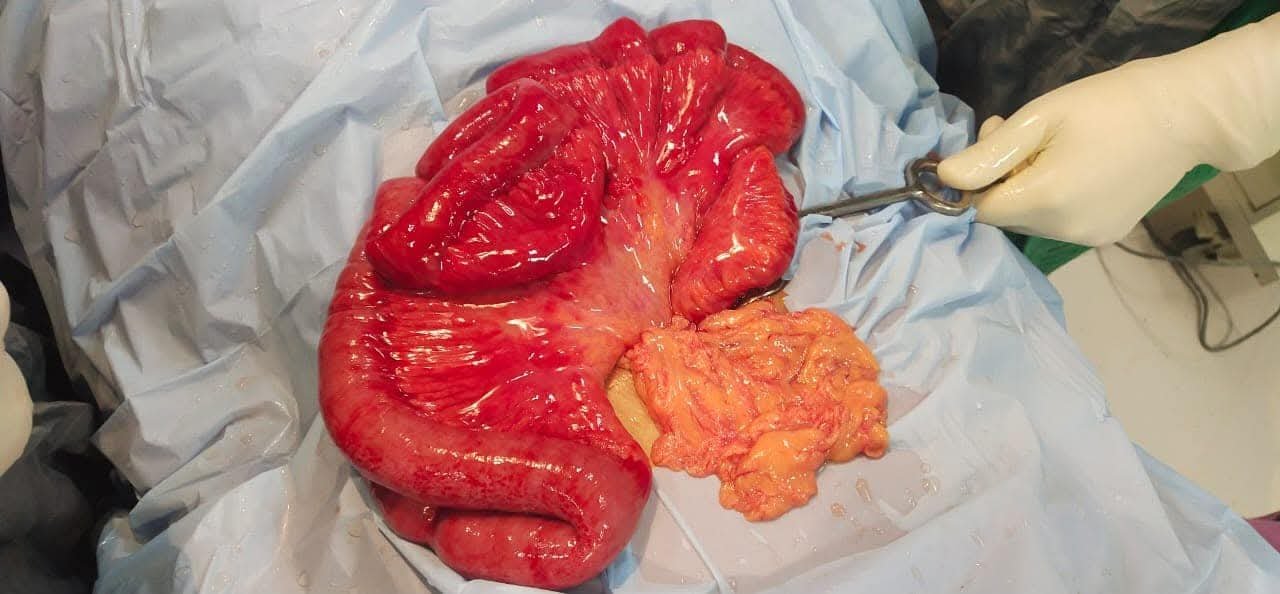
Because the bowel required detailed assessment, the procedure was converted to an exploratory laparotomy. This allowed safer visualization and evaluation of intestinal viability.
Bowel Salvage Instead of Bowel Resection
The constricting adhesive band was divided immediately, relieving the strangulation. Although the bowel initially appeared almost gangrenous, the surgical team did not rush into resection. The affected jejunal segment was wrapped in warm normal-saline packs while the patient received 100% oxygen and continued supportive resuscitation.
Over the next several minutes, the bowel showed progressive return of healthy pink colour, restoration of mesenteric arterial pulsations, improved bowel-wall perfusion and normal peristaltic activity. These signs confirmed restoration of intestinal blood flow, so the entire small intestine was preserved and resection was safely avoided.
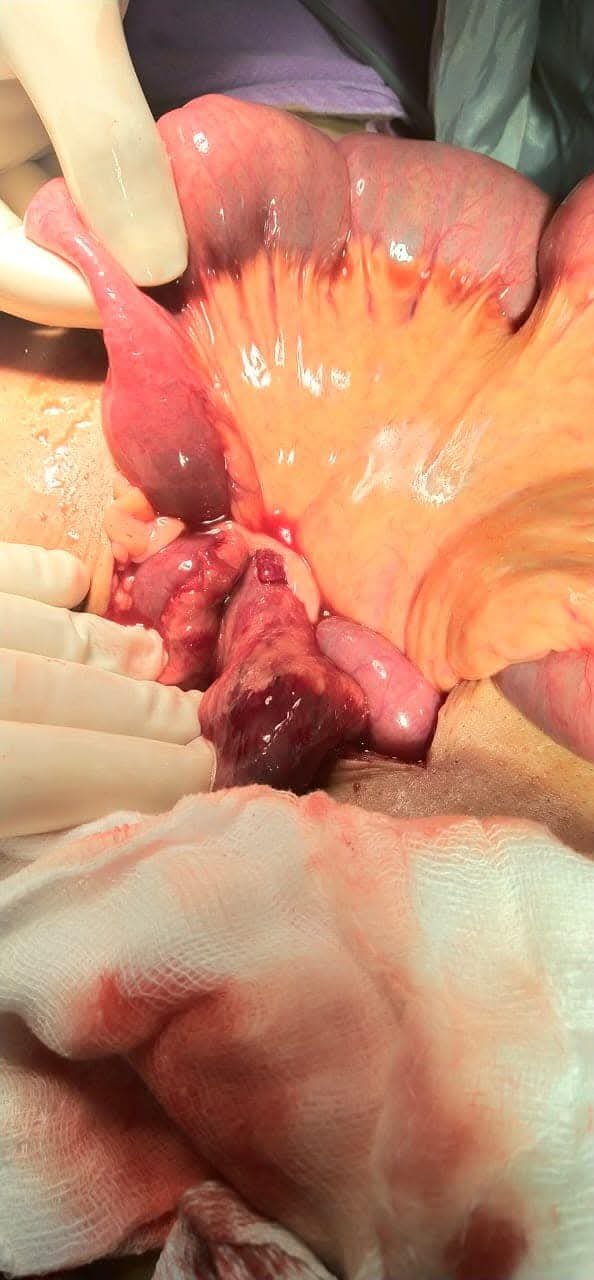
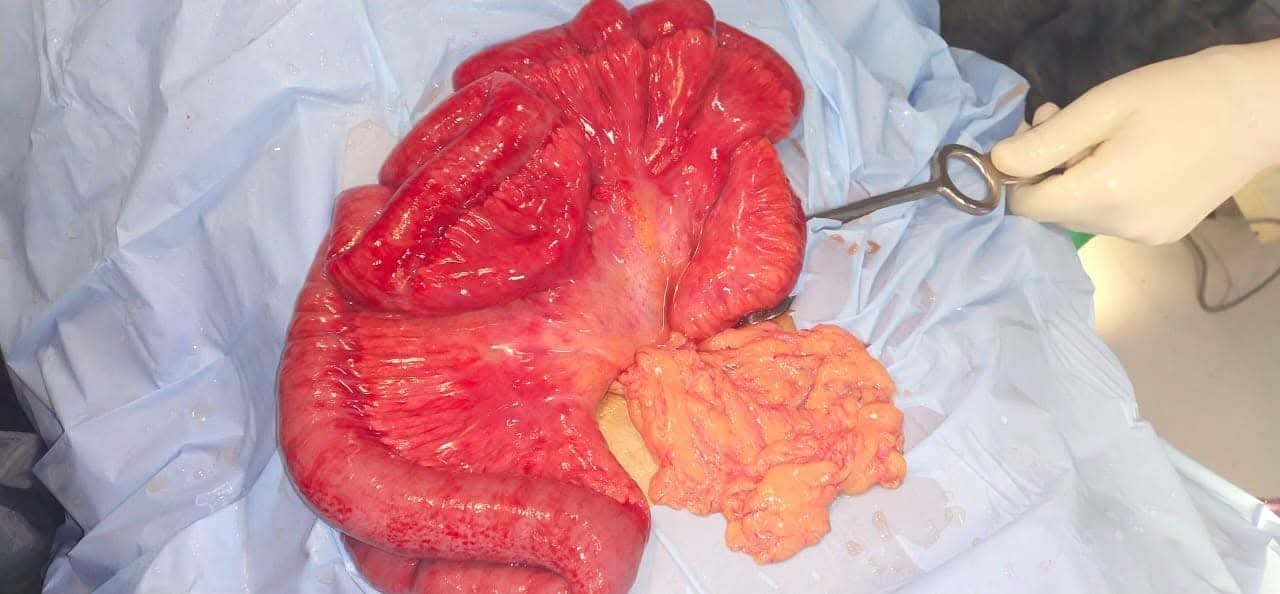
After confirming adequate bowel viability, the abdomen was closed. Where clinically appropriate, systemic anticoagulation was started with heparin followed by oral anticoagulants to support intestinal microcirculation and reduce ongoing vascular compromise.
Postoperative Recovery
- Early return of bowel function
- Gradual tolerance of oral diet
- No postoperative complications
- Excellent clinical recovery
- Discharged home on the fifth postoperative day
Why This Case Is Remarkable
A closed-loop small bowel obstruction is among the most dangerous forms of intestinal obstruction because blood supply can be interrupted within hours. Once gangrene develops, resection may become unavoidable. In this patient, timely diagnosis, prompt surgery and careful viability assessment restored perfusion before irreversible injury occurred.
This case highlights that not every ischemic-looking bowel requires immediate resection. After relieving the obstruction, meticulous assessment by an experienced surgical team can preserve viable intestine and improve outcomes.
Case Summary
| Consultant Surgeon | Dr. Raman Garg |
|---|---|
| Hospital | Bombay Gastro & Cancer Institute, Bathinda |
| Patient | 65-year-old Female |
| Diagnosis | Acute closed-loop jejunal obstruction with strangulating adhesive band and severe ischemia |
| Procedure | Emergency diagnostic laparoscopy, conversion to exploratory laparotomy and division of adhesive band |
| Key outcome | Complete small-bowel salvage without intestinal resection |
| Recovery | Uneventful recovery and discharge on the fifth postoperative day |
Frequently Asked Questions
What is a closed-loop small bowel obstruction?
It occurs when a segment of intestine is blocked at two points simultaneously. The trapped bowel rapidly develops pressure and can lose its blood supply, making it a life-threatening emergency.
Why is a closed-loop obstruction dangerous?
Blood supply can become compromised quickly. If treatment is delayed, the bowel may become gangrenous, perforate and cause severe infection or sepsis.
What causes a constricting fibrous band?
Adhesive bands most commonly develop after previous abdominal surgery. They can also be congenital or result from abdominal infection or inflammation.
What symptoms need immediate medical attention?
Severe abdominal pain, persistent vomiting, abdominal swelling, inability to pass stools or gas, fever or worsening tenderness may indicate intestinal obstruction and require emergency care.
Does every intestinal obstruction need surgery?
No. Some simple obstructions may be managed conservatively. A closed-loop obstruction or suspected strangulation requires emergency surgery because delay can cause bowel gangrene.
Why was laparoscopy converted to open surgery?
Once severe ischemia was detected, conversion allowed better visualization, safer assessment of bowel viability and definitive treatment.
Why was the intestine not removed immediately?
The obstruction was first relieved and the bowel was reassessed. As blood flow returned and the bowel regained a healthy appearance, it was safely preserved.
Can bowel that appears almost gangrenous recover?
Yes, in selected cases, if blood supply is restored before irreversible damage. Careful intraoperative viability assessment is essential.
What happens if bowel becomes permanently gangrenous?
Gangrenous bowel must be removed. Depending on the length removed, an anastomosis or stoma may be needed, and long-term digestive or nutritional complications are possible.
What is bowel viability?
It means the intestine has adequate blood supply and can function. Surgeons assess colour, arterial pulsations, perfusion and peristalsis before deciding whether resection is necessary.
How long was the hospital stay?
The patient recovered well, gradually resumed oral intake and was discharged on the fifth postoperative day.
Can intestinal obstruction recur?
Yes. Patients with abdominal adhesions may develop recurrent obstruction. Follow-up and prompt care when symptoms recur are important.
Can this condition be prevented?
Not every case is preventable, but early evaluation of pain, vomiting, distension and constipation can prevent delay and irreversible bowel damage.
When should I consult a surgical gastroenterologist?
Do not delay if you have severe pain, repeated vomiting, abdominal swelling or inability to pass stools or gas. Early consultation can be lifesaving.
Who treated this patient?
This case was successfully managed by Dr. Raman Garg using timely emergency surgery and careful intraoperative decision-making to preserve the small intestine without resection.
Patient identity has been withheld to maintain confidentiality. This case is shared solely for educational purposes. Individual diagnosis and treatment should always be based on evaluation by a qualified medical professional.


